UN Deputy Secretary-General Stresses Dangote's Vital Role in Tackling Africa's Food Insecurity
During a significant visit to the industrial complex of Dangote Industries Limited in Ibeju-Lekki, Lagos, Deputy Secretary-General of the United Nations, Amina Mohammed, highlighted the strategic importance of the company, particularly Dangote Fertiliser Limited, in combating Africa's escalating food security challenges. She called for stronger global partnerships to amplify its scalable solutions, describing the integrated industrial model as a critical pathway to mitigate the continent's food crisis.
Amplifying Solutions for Food Security
Mohammed stated that the United Nations' primary objective is to enhance visibility and support for initiatives capable of addressing food shortages. "I think the UN's job here is to amplify and to put visibility on the possibilities of mitigating a food security crisis, and this is one of them," she remarked. She further expressed hope for continued engagement with international partners and countries to collaborate with Dangote Industries, emphasizing the need for collective action in the face of mounting pressures.
Her comments come amid heightened concerns over food shortages and supply chain disruptions across Africa, driven by global economic strains, climate-related shocks, and geopolitical tensions, particularly in the Middle East. These factors have exacerbated vulnerabilities, making scalable industrial solutions like Dangote's increasingly vital.

Dangote's Response to Regional Challenges
President and Chief Executive of Dangote Industries Limited, Aliko Dangote, detailed the company's efforts to support African markets affected by supply disruptions. He noted that the group has intensified exports of urea fertiliser and Premium Motor Spirit (PMS) to bolster agricultural productivity and ease supply constraints. "The challenges are many. One is of urea, which is a fertiliser that we have. I think in the last couple of days we've been loading mostly to African countries, which we were not doing before. And now it's to do with petroleum products, which we are now sending mainly to African countries," Dangote explained.
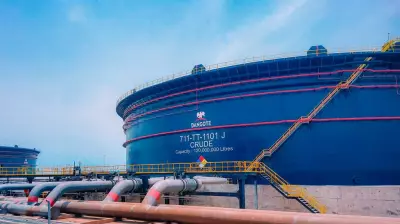
He added that the refinery has shipped approximately 17 cargoes of petrol to African nations, leveraging its 650,000 barrels per day capacity to stabilise supply across multiple regions. This initiative aims to cushion the impact of the ongoing crisis and support economic stability.
Feedstock Supply and Operational Hurdles
On the issue of feedstock supply, Dangote commended the Nigerian National Petroleum Company Limited for increasing crude deliveries to the refinery in March, with volumes rising to 10 cargoes—six supplied in naira and four in dollars—to enhance domestic fuel availability. However, he pointed out that this supply remains below the 19 cargoes required for optimal operations, necessitating imports from the United States and other African producers to bridge the gap.
Dangote also expressed concern over the reluctance of international oil companies operating in Nigeria to sell crude directly to the refinery. He stated that their preference for selling to traders forces the refinery to repurchase at higher costs, which has broader negative implications for the Nigerian economy and overall industrial efficiency.
This situation underscores the complex interplay between local industrial efforts and global market dynamics, highlighting the need for coordinated policies and partnerships to ensure sustainable food and energy security in Africa.