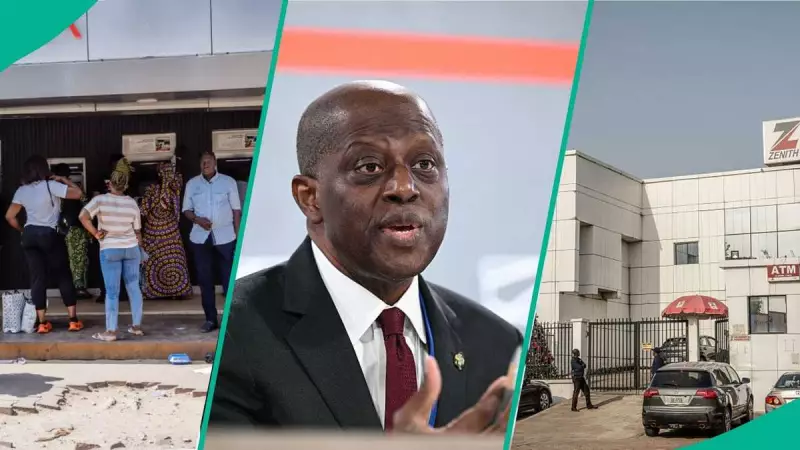
The Central Bank of Nigeria (CBN) has announced a significant milestone in its ongoing banking sector reform, confirming that a total of 20 deposit money banks (DMBs) have successfully complied with the new minimum capital requirements.
Recapitalisation Progress Ahead of March Deadline
The disclosure was made public by the Deputy Governor in charge of Economic Policy, Dr Muhammad Abdullahi, during the launch of the Nigerian Economic Summit Group’s (NESG) 2026 Macroeconomic Outlook event held in Lagos. Abdullahi stated that the recapitalisation exercise is advancing steadily as the March 2026 deadline approaches, with several other financial institutions in the final stages of securing compliance.
He emphasised that the programme's core objective extends beyond merely increasing the capital base of banks. The initiative is strategically designed to forge more robust financial institutions capable of underpinning Nigeria’s ambition to achieve a trillion-dollar economy.

Focus on Productive Lending and SME Support
The CBN official stressed that a stronger banking sector must result in tangible benefits for the real economy, particularly through increased access to affordable credit. He highlighted small and medium-sized enterprises (SMEs) and businesses needing long-term funding as primary beneficiaries.
Abdullahi issued a clear warning, noting that recapitalisation alone is insufficient without a parallel focus on productive and sustainable lending. To ensure the newly strengthened capital is deployed effectively, the apex bank has enhanced its regulatory oversight. It is now utilising technology-driven monitoring systems to track and ensure funds are channelled into priority sectors of the economy.
The Full List of Compliant Banks
The Central Bank has released the names of the twenty commercial banks that have met the capital requirements for their respective licences—international, national, or regional. The list is as follows:
- Access Bank Plc.
- Zenith Bank Plc.
- United Bank for Africa (UBA) Plc.
- Fidelity Bank Plc.
- GTBank / GTCO (Guaranty Trust Bank).
- First HoldCo Plc / First Bank of Nigeria.
- Ecobank Nigeria.
- Citibank Nigeria Limited.
- Stanbic IBTC Bank.
- Wema Bank Plc.
- Premium Trust Bank.
- Globus Bank.
- Providus Bank.
- Lotus Bank.
- Jaiz Bank.
- Unity Bank (via merger with Titan Trust Bank/Union Bank entity).
- Polaris Bank.
- The Alternative Bank (AltBank).
- Sterling Bank / Sterling Financial Holdings.
- Nova Bank.
Addressing Nigeria's Broader Finance Gap
During his address, Dr Abdullahi also shed light on Nigeria's extensive development finance challenge. He estimated that the country requires approximately N230 trillion to fund critical sectors—a figure that vastly overshadows the combined capital base of development finance institutions, which remains below N9 trillion.
In response, efforts are being concentrated on mobilising private sector funding from both local and international sources. Concurrently, there is a push to correct incentives within development finance institutions to guarantee the efficient utilisation of available funds. The Ministry of Finance is spearheading this development finance strategy, with the CBN providing the necessary regulatory support to foster sustainable economic growth.
The recapitalisation drive is also expected to catalyse further consolidation within the banking industry. Reports from credit rating agency DataPro had previously projected that at least three bank mergers could materialise in early 2026, as smaller lenders seek strategic combinations to meet the CBN's stringent capital thresholds and survive heightened market scrutiny.