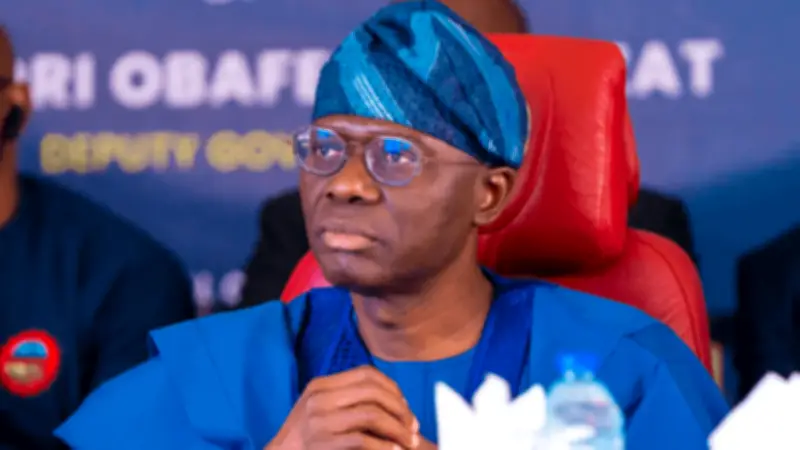
Lagos State Governor, Babajide Sanwo-Olu, has overseen a state that continues to set the benchmark for economic competitiveness in Nigeria. The latest Phillips Consulting State Performance Index (PSPI) reinforces a reality that has become increasingly difficult to ignore: Lagos is not merely Nigeria's largest economy; it is also its most competitive. Behind that success lies a decades-long commitment to reforms, infrastructure, innovation, and institutional development that continues to distinguish the state from much of the federation.
The Foundations of Competitive Governance
Success in governance is rarely accidental. It is often the product of deliberate choices made consistently over time, sometimes across multiple administrations and political cycles. Few places illustrate this principle more clearly than Lagos. For decades, Lagos has remained at the centre of Nigeria's economic story. It is the country's commercial capital, its leading investment destination, and the preferred base for thousands of businesses operating across virtually every sector of the economy. Yet the state's continued dominance raises an important question: what exactly makes Lagos more competitive than most other states? The latest Phillips Consulting State Performance Index offers some answers.
Economic Ecosystem and Performance Rankings
Although the assessment measures performance across multiple governance and development indicators, its findings point to a recurring theme. Lagos has developed an economic ecosystem capable of attracting investment, generating revenue, supporting innovation, and creating opportunities at a scale unmatched elsewhere in the country. The report ranked Lagos first in Economic Potential and first in Socioeconomic Performance, underscoring the state's ability to transform economic resources into measurable outcomes. These rankings reflect more than population size or geographical advantage. They speak to the effectiveness of policies and institutions that have evolved over several decades.

Key Drivers of Competitiveness
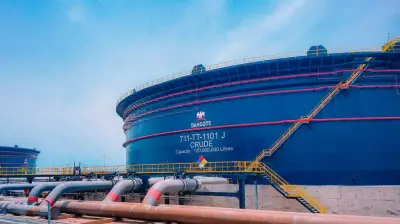
One of the most important foundations of Lagos' competitiveness is economic diversification. While many states continue to rely heavily on federal allocations, Lagos has built an economy driven by commerce, logistics, manufacturing, financial services, technology, real estate, entertainment, and professional services. This broad economic base has reduced vulnerability to external shocks while creating multiple channels for growth and investment. The state's revenue profile tells a similar story. Lagos generates more internally generated revenue than any other state in the federation, providing resources that support infrastructure development, public services, and long-term planning.
Reinvestment and Infrastructure
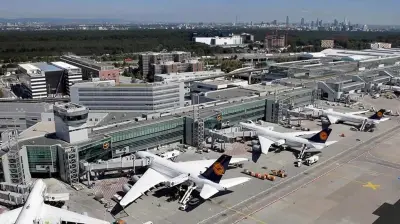
Yet revenue alone does not create competitiveness. What distinguishes Lagos is its ability to reinvest economic gains into assets that sustain future growth. Over the years, successive administrations have invested heavily in transportation infrastructure, urban renewal, digital governance, public services, and business-support systems. These investments have strengthened productivity, reduced barriers to commerce, and improved the overall environment for enterprise. The impact is visible across multiple sectors. Lagos hosts Nigeria's busiest seaports, its largest concentration of financial institutions, and one of Africa's fastest-growing technology ecosystems. The state remains the preferred destination for startups, multinational corporations, and investors seeking access to Nigeria's largest consumer market. Its creative economy continues to shape culture and commerce across the continent, while its industrial corridors support manufacturing activity that extends well beyond state boundaries.

Institutional Continuity and Stability
Another factor highlighted by the state's performance is institutional continuity. Economic transformation rarely occurs within a single political tenure. It requires consistency, strategic planning, and the discipline to sustain long-term priorities. Lagos has largely maintained a common development direction across successive administrations, particularly in areas such as infrastructure development, revenue administration, urban planning, and economic expansion. This continuity has allowed projects to mature, policies to take root, and institutions to strengthen over time. In a governance environment where abrupt policy reversals can discourage investment and disrupt development, Lagos has demonstrated the value of stability and long-range thinking.
Managing Complexity and Scale
The Phillips Consulting assessment also points to the growing importance of institutional effectiveness. Strong public institutions, expanding digital systems, and structured planning frameworks have helped Lagos manage the complexity that comes with being Nigeria's most populous and economically active state. That capacity is increasingly important because Lagos operates at a scale unlike any other state in the federation. Millions of people live, work, and conduct business within its borders. Thousands more arrive every year in search of employment, education, and economic opportunity. Indeed, one of the defining features of Lagos is its ability to attract people. Businesses move to Lagos because customers, talent, and infrastructure are concentrated there. People move to Lagos because businesses are there. The result is a cycle in which opportunity continues to reinforce opportunity. This dynamic helps explain why Lagos remains the nation's leading centre for entrepreneurship and innovation despite persistent urban pressures.
Challenges and Outlook
To be sure, the state's journey has not been without challenges. Rapid population growth continues to place pressure on housing, transportation, healthcare, environmental management, and public utilities. Citizen perception surveys referenced in the Phillips Consulting assessment also reveal concerns around congestion, affordability, and quality-of-life issues. Yet these pressures are often the consequence of success rather than stagnation. The same factors that attract investment and economic activity also create demands that require continuous adaptation and expansion. Perhaps this is why the Phillips Consulting report maintains a positive outlook for Lagos. Beyond current performance indicators, the assessment recognises the state's resilience, institutional capacity, and ability to respond to changing realities. These qualities have become increasingly important in an era defined by economic uncertainty, technological disruption, and intensifying competition for investment.
Conclusion: Competitiveness Built Over Time
Ultimately, Lagos did not become Nigeria's most competitive economy overnight. Its position today reflects years of investment in infrastructure, reforms, innovation, human capital, and governance systems. The state's experience demonstrates that sustainable growth is built not merely on resources or ambition, but on the consistent pursuit of policies that create value over time. As Nigeria searches for pathways to broader economic transformation, the Lagos experience offers an important lesson. Competitiveness is not inherited; it is built. And in that regard, Lagos remains one of the country's most compelling success stories.