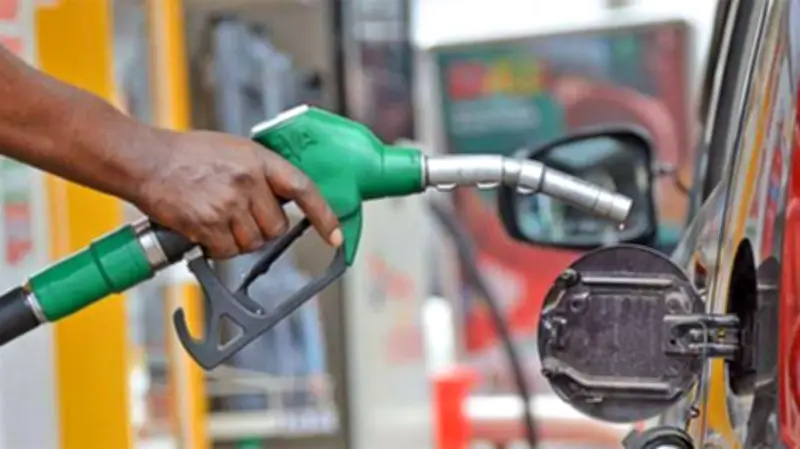
Nigerians are anticipating a reduction in the pump prices of petroleum products following a decline in global crude oil prices after the United States and Iran reached a peace agreement to end months of heightened geopolitical tensions. The global economy has so far avoided a slowdown despite more than three months of conflict in the Middle East, the International Monetary Fund (IMF) has said, while welcoming the reopening of the Strait of Hormuz following the ceasefire agreement, but warned that risks to growth remain high if disruptions to energy supplies resume.
Peace Deal and Oil Market Impact
The development, which centers on a memorandum of understanding between both countries, is expected to restore stability to global oil supply routes, particularly with the planned reopening of the Strait of Hormuz. The strategic waterway, through which a significant portion of the world's oil passes, has been at the center of disruptions that pushed crude prices upward in recent months. Announcing the framework deal, U.S. President Donald Trump stated that the Strait of Hormuz would reopen “toll-free,” alongside the lifting of the U.S. naval blockade on Iranian ports. The formal signing of the agreement is scheduled to take place in Switzerland on June 19, although details remain sparse and uncertainties persist regarding its durability.
The immediate reaction in global oil markets has been a sharp drop in crude prices. Brent Crude, which traded at around $92 per barrel on May 30, has steadily declined throughout June, shedding approximately $10 in value as of mid-June. This downward trend has raised expectations among Nigerian consumers that relief may soon come at the fuel pumps, given the rapid way Dangote Refinery and marketers managed pump prices in the past few months.

Historical Price Increases in Nigeria
The country witnessed a series of steep increases in early 2026, reflecting both global oil market instability and domestic pricing dynamics. On January 27, petrol prices rose from N699 to N799 per litre. This was followed by another increase on March 3, when prices climbed from N774 to N874. On March 6, the price surged further to N995, before jumping significantly to N1,175 on March 9. Although there was a slight adjustment to N1,075 on March 13, prices quickly returned to N1,175 and eventually peaked at N1,245 per litre on March 21. The only notable relief came on May 30, when Dangote Refinery reduced its ex-gantry price from N1,275 to N1,250 per litre.
Against this backdrop of sustained increases, the recent decline in crude prices sparked optimism. However, analysts and industry experts caution that any reduction in pump prices may not be immediate and could be moderated by a range of structural and market factors.
Expert Opinions on Price Adjustments
An economist at the University of Nigeria, Nsukka (UNN), Prof Emmanuel Nwosu, expressed reservations about the speed and extent of any price adjustment. He referenced the “rocket and feathers” hypothesis, a well-known economic concept which suggests that prices tend to rise quickly like rockets but fall slowly like feathers. Importantly, Nwosu raised concerns about domestic market behavior, suggesting that oil marketers in Nigeria might be reluctant to reduce pump prices, even when global conditions justify it. He called for potential government intervention to ensure that consumers benefit from lower crude prices, provided regulatory independence is maintained.
Head of Energy and Power at Fidelity Bank, Emeka Nkemakolam, stressed the historical pattern of asymmetrical price adjustments in the downstream sector. “Pump prices typically rise faster when crude oil prices increase but decline more slowly when crude prices fall,” he noted. Nkemakolam explained that while the drop in crude prices is linked to the U.S.-Iran peace deal, the broader impact on supply chains would take time to materialize.

IMF Analysis on Global Economy
In an analysis released yesterday, entitled ‘Global Economy Endures War Shock—So Far,’ IMF Managing Director Kristalina Georgieva said commodity prices, inflation, and financial conditions had all been affected by the conflict, but not yet in ways that signal a global downturn. However, she cautioned that uncertainty remains elevated, particularly for countries heavily dependent on energy imports and those with limited policy flexibility. Georgieva stated, “More than three months into the war in the Middle East, the global economy appears to be holding up. Commodity prices, inflation and expectations for it, and financial conditions have all been impacted, but not yet in ways that signal a global slowdown.”
The IMF chief noted that concerns at the start of the conflict centered on the potential impact of higher energy prices and the knock-on effects on inflation. Oil prices have risen by about 30 percent above pre-war levels, although the increase has been contained by factors including the use of strategic reserves, higher refinery utilization outside the Gulf, and measures taken by governments to moderate demand and cushion consumers from the shock. According to her, some countries, including China, have been able to ease the disruption by drawing on deep oil reserves, helping to reduce pressure on energy markets and support economic activity. “Oil prices are 30 percent higher than pre-war levels. Yet that is lower than was seen earlier in the conflict, despite the straits’ prolonged closure,” she said.