The House of Representatives has approved a fresh extension of the capital component of the 2025 Appropriation Act, moving the implementation deadline from June 30 to September 30, 2026. This marks the third time the deadline has been extended.
BudgIT Criticizes 2026 Budget as Unrealistic
Civic technology organization BudgIT has described the Federal Government's 2026 budget as overly ambitious, unrealistic, and largely unfeasible under prevailing economic conditions. The group warned that the fiscal plan could deepen Nigeria's fiscal vulnerabilities without urgent reforms.
House Resolution and Emergency Plenary
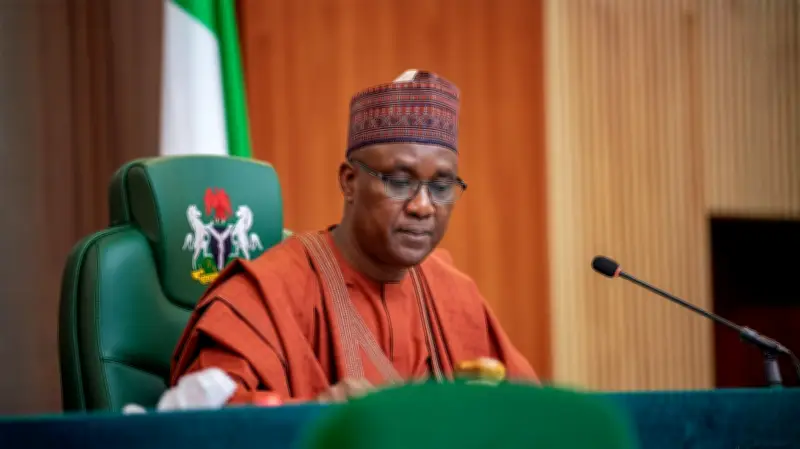
The House resolution followed the passage of the Appropriation (Repeal and Enactment) Act, 2025 (Amendment) (No. 2) Bill, 2026, during an emergency plenary convened to consider the request. The plenary was presided over by Speaker Abbas Tajudeen.

Leader of the House, Julius Ihonvbere, led the debate on the general principles of the bill. He noted that substantial funds released to Ministries, Departments and Agencies (MDAs) remained unspent due to administrative bottlenecks, procurement delays, and implementation challenges. Ihonvbere added that the extended window aims to prevent the abandonment of critical infrastructural projects, allow time for ongoing projects to be finished, and settle outstanding obligations.
Special Sitting Despite Adjournment
The special sitting was held despite the House having adjourned plenary until July 7, following the conclusion of the third legislative year of the 10th Assembly. In a memorandum issued ahead of the sitting, the Acting Clerk of the House, Ibrahim Sidi, informed lawmakers that the session was convened in line with Order 5, Rule 2(2) of the House Standing Orders to consider the amendment bill.
BudgIT Analysis of the 2026 Budget
In its analysis of the approved budget, BudgIT noted that while the government projected total expenditure of N68.32 trillion for the fiscal year, expected revenue stands at only N36.87 trillion, leaving a fiscal deficit of N31.45 trillion. The organization said the deficit, equivalent to 6.41% of the nation's Gross Domestic Product (GDP), exceeds the 3% threshold stipulated under the Fiscal Responsibility Act (FRA), raising concerns about the sustainability of public finances.
According to BudgIT, the government can only finance about 53.9% of the budget from projected revenues, while the remaining 46.1% would depend on borrowings and loans. The group stated that this points to a structural fiscal imbalance entrenched in Nigeria's budgeting framework despite repeated warnings from stakeholders and fiscal policy experts.
Concerns Over Budget Implementation
BudgIT further observed that weak revenue performance and declining public trust in governance continue to undermine effective budget implementation, stressing that transparency in budget execution remains critical. It noted that approved budgets often fail to translate into actual performance due to opaque fund releases and inadequate disclosure of execution reports.
The organization acknowledged that the budget reflects an expansionary fiscal posture, with capital expenditure estimated at N32.28 trillion, representing 47.13% of total spending and signalling the government's commitment to infrastructure development and economic growth. However, it warned that mounting debt obligations could significantly constrain the intended impact of such investments. Debt servicing is projected to gulp N15.8 trillion, accounting for about 23% of total expenditure and nearly 45% of anticipated revenue.