Global Conflicts and Economic Shifts: Nigeria's Precarious Position
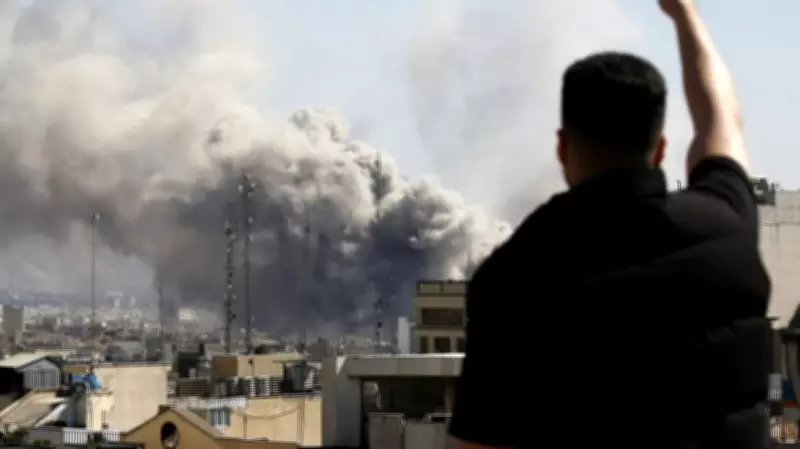
The ongoing America-Iran war and broader geopolitical tensions have starkly exposed Nigeria's vulnerabilities in the global economic order. Advanced economies like the United Kingdom and the United States have long mastered the art of converting wartime gains into national strength, while major European powers such as Russia, Germany, and France demonstrate remarkable resilience, rising from crises like phoenixes. In contrast, Nigeria, like many African nations, faces profound challenges as modern warfare increasingly impacts both direct participants and non-actors due to global interconnectivity.
Economic Disruptions from Distant Conflicts
Non-actors in conflicts may avoid infrastructural destruction or manpower losses, but they inevitably suffer significant economic disruptions. For instance, the blockade of the Strait of Hormuz has inflicted severe hardships on numerous nations uninvolved in the war between Iran, the United States, and Israel. In Nigeria, petrol prices have soared to an all-time high of approximately N1,400 per litre, with similar hikes observed globally, as about 20 percent of the world's petroleum supply traverses that strategic waterway.
Despite Nigeria's oil not physically passing through Hormuz, geographic and market dynamics ensure that events there dictate the market behavior of Nigerian crude. Alarmingly, Nigeria lacks any demonstrable competitive advantage in key sectors, rendering it unable to influence war efforts or shield its citizens and economy from the harsh effects of international conflicts.

Nigeria's Strategic Deficiencies
As the world's 15th largest oil producer, with output fluctuating between 1.5 and 1.7 million barrels per day, oil remains the mainstay of Nigeria's economy. Yet, the nation is not strategically positioned to leverage this market strength to protect its people or negotiate favorable terms with other countries in the event of war. This stands in stark contrast to many European nations, which wield considerable influence through investments in shipping, marine insurance, and maritime businesses.
For example, before Iran declared the Strait of Hormuz closed or rendered it impassable via military action, maritime insurers and Protection and Indemnity clubs in Europe effectively achieved this by withdrawing war risk coverage. Ships cannot sail without insurance, and Europe's control over these services allows it to sway war dynamics without firing a single shot.
The Core of Sovereign Resilience
Deliberately building a nation's economic strength to bolster its political stature, military capabilities, and diplomatic perception is fundamental to sovereign resilience. Frederick Engels articulated this perspective in Socialism: Utopian and Scientific, noting that the economic structure of society forms the real basis from which legal, political, and ideological superstructures emerge. Nigeria is not taken seriously on the global stage because it lacks economic strength and, consequently, political weight.
A poignant illustration of this disregard occurred when Donald Trump designated Nigeria as a Country of Particular Concern and threatened unilateral military intervention against ISIS-linked terrorists. Before Nigeria's government could coordinate a response, American forces commenced operations within its borders. While some Nigerians may have welcomed the respite, this episode highlighted a blatant disregard for Nigeria's sovereignty.
Nigeria's Vulnerability in a Potential World War III
If global crises escalate into a full-blown World War III, Nigeria could suffer immensely. With a population of about 240 million people, weak reserves, poor agricultural planning, inadequate investment, outdated war technology, and ineffective leadership, Nigeria risks mirroring Russia's plight during World War I. Historian Orlando Figes notes that Russia, despite having the highest population among belligerent nations, was the first allied power to experience manpower shortages due to a young population and weak reserves. Its commanders, drawn from a narrow aristocratic circle, conducted warfare in an archaic 19th-century style, ignoring 20th-century technological advancements.

Critical Areas for Immediate Action
To avert such a fate, Nigeria must urgently invest in agriculture and establish a food reserve capable of sustaining the nation for at least a decade without reliance on foreign supplies. According to a Business Day editorial from July 11, 2025, citing the Food and Agriculture Organisation, Nigeria records a meager yield of 0.9 tonnes per hectare for beans, compared to Egypt's 2.1 and Ethiopia's 4.2 tonnes. This yield gap stems from reliance on rain-fed agriculture, outdated practices, and unaffordable inputs.
In the first quarter of 2024, Nigeria imported N1.7 trillion worth of food, contributing to a total of N2.79 trillion in food imports for the year to date, as reported by the National Bureau of Statistics. This heavy reliance on external food supplies exacerbates economic vulnerabilities through foreign exchange distortions and exposes the country to multiple crises.
Missed Opportunities in Key Sectors
Despite having over 36.9 million hectares of cultivable land, Nigeria fails to achieve self-sufficiency in food production. The nation imports up to 1.2 million metric tons of fish annually, despite possessing an 853-kilometer coastline and a total water surface of about 14.99 million hectares, which constitutes 15.9 percent of its total area. This represents a significant missed opportunity in aquatic resources.
Similarly, Nigeria's steel industry remains underdeveloped due to corruption and mismanagement. The Ajaokuta Steel Mill has an installed capacity of 3 million metric tons per annum, with an initial production capacity of 1.3 metric tons, yet it has been non-operational for over forty years, wasting vast investments and 24,000 hectares of land. The Itakpe Iron Ore Mine, with a reserve of 3 billion tons at 32 percent iron concentration, lies dormant, while the Delta Steel Company has ceased operations, with its remnants taken over by Premium Steel and Mines Limited. These industries should be supporting Nigeria's military, industrial, and metallurgical needs but instead symbolize systemic failures.
In conclusion, Nigeria must address these strategic deficiencies to enhance its resilience in an increasingly volatile global landscape. Continued inaction risks leaving the nation perilously exposed to the economic and geopolitical shocks of modern warfare.