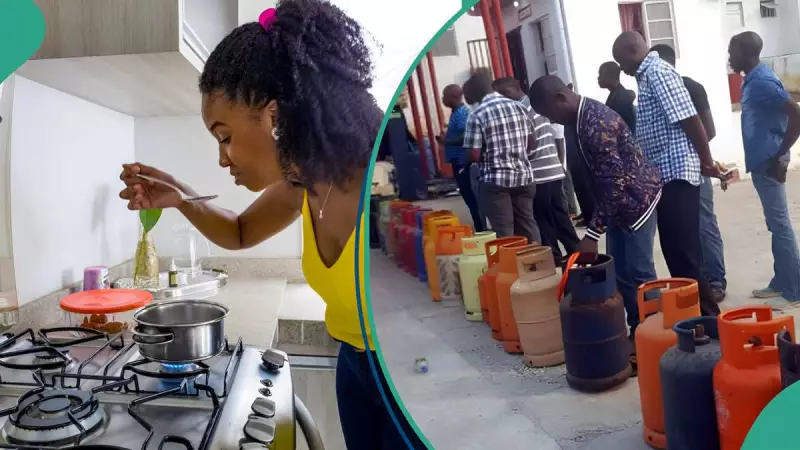
Nigerian households are experiencing a welcome reduction in the cost of Liquefied Petroleum Gas (LPG), commonly known as cooking gas, across major urban centres. This price decrease offers a measure of relief to families struggling under the weight of the country's high cost of living.
New Rates Emerge in Abuja and Lagos
Findings indicate a noticeable easing of prices in cities including Lagos and the Federal Capital Territory, Abuja. Dealers have attributed this positive trend to two primary factors: improved product availability at depots and a period of relative stability in the foreign exchange market.
In Abuja, reports from the News Agency of Nigeria (NAN) show that one kilogramme of cooking gas now sells for between N1,080 and N1,400, depending on the retail outlet. Notably, NIPCO is currently offering the lowest rate at about N1,080 per kg. This marks a sharp decline from the steep prices of N1,700 to N1,800 per kilogramme recorded in the latter part of the previous year.

In Lagos, residents have also reported paying less to refill their cylinders compared to just a few weeks ago. This development is being celebrated as a rare positive shift within Nigeria's challenging inflationary economy.
Residents Welcome Relief But Call for Sustainability
The price drop has sparked cautious optimism among consumers. Mrs Victoria Ahaneku, a civil servant, welcomed the change, stating that cheaper cooking gas could improve household welfare and free up income for other needs. "The reduction in the price of cooking gas will increase consumer spending power because people will have more disposable income for other needs," she said.
However, Ahaneku and others noted that LPG remains expensive for many, forcing continued reliance on charcoal and firewood, which are neither cheap nor environmentally friendly.
Other residents emphasized that the sustainability of lower prices is more critical than temporary relief. Mrs Mary Olobeyo, a businesswoman, pointed to underlying structural issues like transportation, storage, and retail costs that affect final prices. She called for government investment in pipelines and rail transport for gas to reduce dependence on expensive road tankers.
Teacher Aisha Abubakar highlighted how price instability discourages wider adoption. "What Nigerians want is a sustained reduction. Stable and affordable prices will encourage more households to switch to cooking gas," she stated.
High Cost of Living Remains a Pressing Concern
Despite the positive news on gas, many Nigerians feel the reduction is insufficient against the backdrop of soaring living costs. Mr Adebayo Olurunfemi, a businessman, acknowledged the drop but argued it does little to offset rising expenses such as taxes, rent, school fees, and petrol prices.
Charity Samuel, a public servant, urged for further price cuts to improve affordability, noting that LPG remains the cleanest and safest cooking option for families.
The current price decline follows a significant spike to about N1,800 per kg in September 2025, which was triggered by the PENGASSAN strike and maintenance work at the Nigeria LNG Train Four facility. The Minister of State for Petroleum Resources (Gas), Dr Ekperikpe Ekpo, had previously assured Nigerians that prices would normalise and directed the NMDPRA to intensify monitoring of depots to curb hoarding and manipulation.
For now, households are enjoying a rare dip in energy costs, with the hope that improved market conditions and regulatory oversight will help sustain the trend.