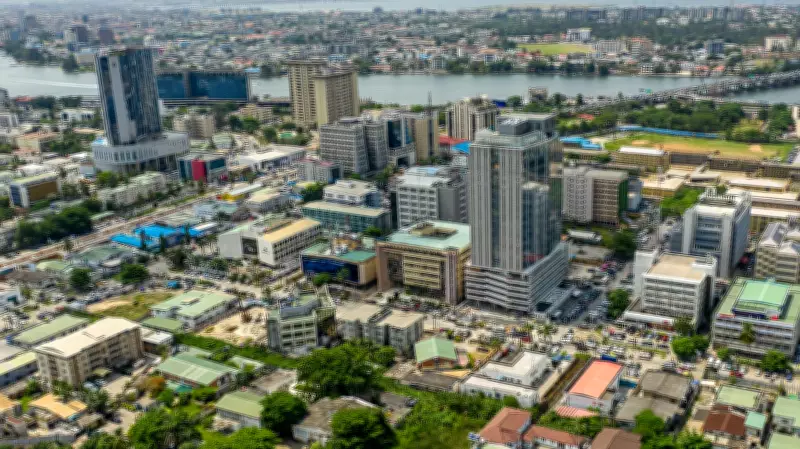
Nigeria's expenditure on infrastructure is forecast to increase by 77 percent to $40 billion by the year 2050, solidifying its status as the largest market in Africa and placing it 23rd worldwide, according to a new report.
Power Sector Investments
The country's investment in power is also expected to surge by 187 percent between 2024 and 2050, rising from $1.1 billion to $3.2 billion. This growth is supported by expanding electricity access, decarbonisation targets, and increasing demand.
These findings are part of PwC's Global Infrastructure Outlook, released on Tuesday. The report indicates that annual global infrastructure spending is projected to climb from $4.4 trillion in 2024 to $6.9 trillion in 2050, resulting in a cumulative investment of $151.1 trillion.

Regional Trends
The Asia-Pacific region is expected to remain the engine of global infrastructure activity, accounting for more than half of total investment through 2050, driven by urbanisation, industrial expansion, and the rapid build-out of power and digital networks.
Africa, according to the report, will experience the world's fastest-growing infrastructure investment rate, with annual spending increasing nearly 1.8 times by 2050, reflecting demographic changes and significant infrastructure gaps.
Europe and North America are entering a period of renewal as ageing transport, energy, and water systems require large-scale modernisation to remain resilient and competitive. Annual infrastructure spending is forecast to rise 1.6 times by 2050 across the Americas and 1.4 times in Europe. The regional contrasts will shape where capital flows and delivery capability become most critical.
Nigeria's Outlook
Chioma Obaro, Partner and Capital Projects and Infrastructure Leader at PwC Nigeria, commented: "Africa is expected to record the fastest infrastructure investment growth globally by 2050, driven by rapid population growth, urbanisation and the need to close long standing infrastructure gaps. Nigeria already leads the continent's infrastructure market, with annual spending projected to rise by 77 per cent to $40 billion by 2050, maintaining its number one position in Africa and ranking 23rd globally."
She noted that this growth will be shaped by increased investment in transport connectivity, a rapid expansion of power infrastructure, and rising demand for digital and smart infrastructure to support future economic growth. "To unlock this potential, stronger public private collaboration will be essential to deliver investment ready projects and build a more sustainable future for generations to come," she stated.
Cumulative Investment
The report said that across the period, cumulative global investment is forecast to reach $151.1 trillion, as countries modernise transport, power, and industrial systems to meet the demands of AI, electrification, and urbanisation. In real terms, the forecast suggests global infrastructure spending over the next 25 years will be double that of the past 20 years, before which comparable data is unavailable.
PwC's analysis is the first of its kind to offer long-term infrastructure spending forecasts to 2050 for nine sectors, 20 subsectors, and 45 countries and territories, which represent 88 percent of global economic output. It draws on the last 20 years of spending data and models future spending based on economic and policy factors.
The outlook highlights that investment in power, transport, and digital infrastructure will converge to create more intelligent networks, where traditional assets operate as part of connected, digitally enabled, and electrified systems.
Clara Cutajar, Global Infrastructure Leader at PwC Australia, said: "This is not a traditional construction cycle. This next generation of infrastructure will be intelligent, connected and adaptable, whether that's roads built for autonomous vehicles and wireless charging or businesses running automated supply networks powered by clean energy and secure computers."