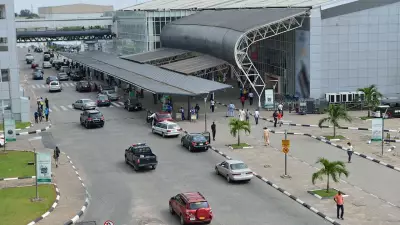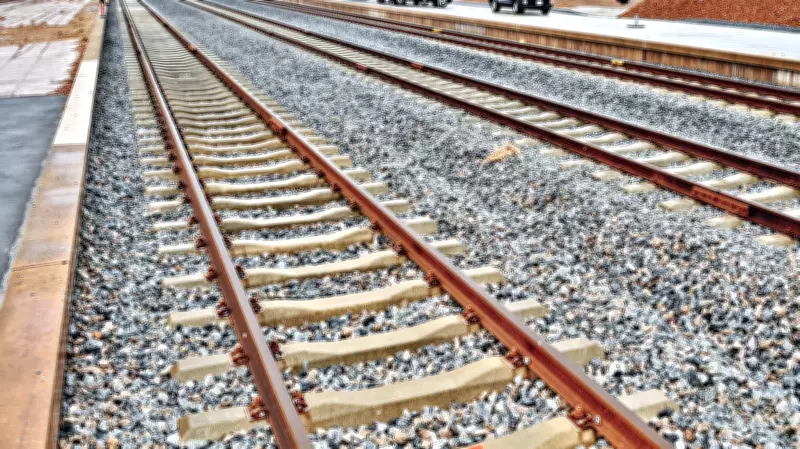
The Nigerian Railway Corporation (NRC) has reported a significant increase in cargo movement via rail at Lagos seaports, reaching 176,820 tonnes with 198 freight trips during the first quarter of 2026. This information comes from the NRC's Q1 operational report, which highlights that the trial cargo evacuation was largely driven by freight operations linked to APM Terminals and ENL Consortium terminals at Apapa Port.
Breakdown of Freight Operations
According to the report, APM Terminals alone accounted for 129,240 tonnes of cargo movement, while ENL terminals recorded 47,580 tonnes. The NRC operated a total of 198 freight trips, comprising 122 standard gauge freight movements linked to APM Terminals, six narrow gauge freight operations, and 70 freight services for ENL terminals.
APM Terminals Performance
The NRC report showed that APM Terminals moved 38 freight services in January, 34 in February, and 50 in March, which emerged as the busiest month. In volume terms, APM Terminals handled 34,920 tonnes in January, 34,840 tonnes in February, and 55,640 tonnes in March, bringing the quarterly total to 125,400 tonnes under standard gauge operation. On the narrow gauge, freight services moved 3,840 tonnes within the same period, raising the cumulative cargo throughput linked to the terminal to 129,240 tonnes.

Operators Utilizing the Rail Corridor
The NRC report gave a breakdown of operators using the rail freight corridor. Eromma emerged as one of the leading users with 32 freight trips and 28,280 tonnes moved. APM Terminals followed with 20 freight services and 24,000 tonnes, while CCECC Track Access recorded 18 freight movements with 20,600 tonnes evacuated by rail. Other notable operators included Depotter with 14,680 tonnes, Ajuba Containers with 13,640 tonnes, and Starlink with 9,120 tonnes.
ENL Terminals Performance
The NRC data also showed that ENL terminals, under standard gauge freight services, handled a total of 70 freight trips and moved 47,580 tonnes between January and March. ENL recorded the highest volume in January with 16,500 tonnes, while February and March recorded 15,780 tonnes and 15,300 tonnes respectively. The report showed that PS Gypsum dominated rail cargo movement through the terminal with 54 freight trips and 28,440 tonnes, while Bueno Gypsum accounted for 16 freight trips and 19,140 tonnes within the review period.
Growing Acceptance of Rail for Cargo Evacuation
The report stated that the steady performance reflects the growing acceptance of rail as a viable alternative for cargo evacuation, especially for bulk cargo importers. Industry stakeholders have repeatedly called for a multimodal transport system for cargo evacuation to decongest the ports, reduce logistics costs and cargo delays, and prevent road deterioration, as 90 percent of containers are transported via trucks.