The African Union (AU) has issued a strong appeal to the United States Senate, urging it to swiftly approve a three-year extension of the African Growth and Opportunity Act (AGOA). This call to action follows the bill's decisive bipartisan passage in the U.S. House of Representatives. The development comes alongside a stark new tariff warning from Washington that could significantly impact African nations, including Nigeria, that maintain trade ties with Iran.
AGOA Extension: A Cornerstone of Trade Seeks Renewal
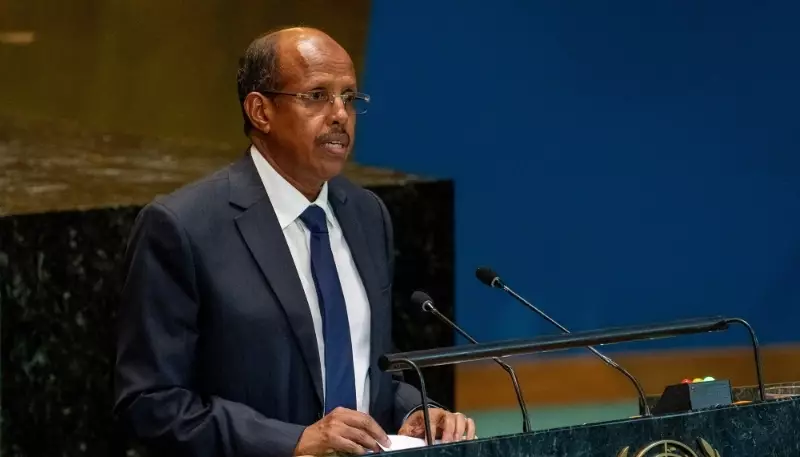
In a formal statement, the Chairperson of the African Union Commission, Mahmoud Ali Youssouf, welcomed the House's move, describing AGOA as a fundamental pillar of U.S.-Africa economic relations. He praised the bipartisan support, which he said demonstrates a lasting American commitment to fostering trade, investment, and shared prosperity with African economies.
The U.S. House of Representatives voted overwhelmingly, 340-54, in favour of extending AGOA, which originally expired on September 30, 2025. The proposed extension, sponsored by Republican Congressman Jason Smith, would renew the trade pact until December 31, 2028. The Act grants eligible African countries, Nigeria included, tariff-free access to the vast U.S. market for a wide range of goods.

An International Trade Centre analysis had projected that AGOA's expiry would slash beneficiary exports by $189 million by 2029, with apparel and textile exports to the U.S. alone expected to fall by 9.7%. The extension, therefore, is seen as vital to providing certainty for African exporters.
Mixed Reactions and the Shadow of New Tariffs
Despite the potential lifeline, some experts express caution. Dr. Muda Yusuf, CEO of the Centre for the Promotion of Private Enterprise (CPPE), voiced scepticism about the immediate impact for Nigeria. He noted that other African nations like South Africa and Mauritius have leveraged AGOA to boost manufactured goods, textiles, and apparel exports—sectors where Nigeria lags. For context, U.S. total goods trade with South Africa was approximately $20.5 billion in 2024, compared to just under $10 billion with Nigeria.
Compounding the trade landscape is a major new policy threat from the United States. U.S. President Donald Trump declared that any country conducting business with Iran would face a 25% tariff on all exports to the U.S. This warning directly targets several African nations, including South Africa, Nigeria, Ghana, Kenya, Tanzania, and Somalia.
This levy would severely reduce the competitiveness of these countries' goods in the American market. The threat emerges as Iran experiences internal unrest due to a collapsing Rial and inflation nearing 40%, with authorities imposing internet blackouts to curb reporting on widespread protests.
Navigating a Complex Trade Future
The convergence of the AGOA extension process and the new tariff warning creates a complex scenario for African economies. The 25% tariff threatens higher export costs, potential currency pressure, and the risk of losing hard-won preferential access to the U.S. market.
Currently, baseline U.S. tariffs on African exports vary. South Africa already faces tariffs of up to 30% on select goods, Nigeria 14-15%, Ghana 10-15%, with Kenya and Tanzania at around 10%. The new measure would impose a uniform and significantly higher penalty based on foreign policy alignment rather than trade policy alone.
The African Union's push for the AGOA extension underscores the act's continued importance. However, the simultaneous tariff ultimatum presents African governments with a difficult balancing act between maintaining valuable trade preferences with the U.S. and pursuing independent economic partnerships elsewhere.