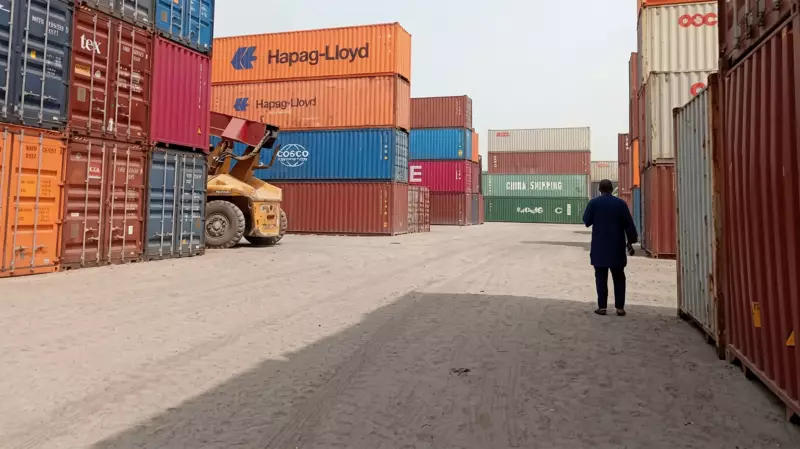
In a landmark move set to reshape economic ties, Nigeria and the United Arab Emirates (UAE) have officially removed import duties on a staggering 13,000 categories of goods. This breakthrough follows 11 months of intense negotiations, culminating in the signing of a Comprehensive Economic Partnership Agreement (CEPA) on Tuesday, January 15, 2026.
The Road to a Historic Agreement
The pivotal trade pact was finalized on the sidelines of the Abu Dhabi Sustainability Summit. Nigeria's Minister of Industry, Trade and Investment, Dr. Jumoke Oduwole, who led the nation's negotiating team, described the process as a series of "hard-fought negotiations." The talks were personally championed by President Bola Ahmed Tinubu, who undertook four official visits to the UAE to strengthen bilateral relations and advance the deal.
Dr. Oduwole highlighted the coordinated effort behind the success, involving a technical inter-ministerial team. "As the Chief Negotiator for Nigeria, I led those negotiations myself with the whole inter-ministerial team. The technical team from Justice to CBN to Customs really delivered for the Nigerian economy on this one in a very coordinated and disciplined manner," she stated in an interview from Abu Dhabi.

Strategic Benefits and Immediate Impacts
The minister emphasized the strategic value of the UAE, the world's 10th largest trading economy, as a gateway for Nigerian products. The CEPA allows Nigerian companies to set up subsidiaries and operations in the UAE, creating a vital platform for expansion into the Middle East and global markets. Conversely, it is expected to boost the confidence of UAE investors looking to enter the Nigerian market.
Discussions with Emirati investors have been active since March of last year, with many seeing Nigeria as a potential hub for accessing the wider African market under the African Continental Free Trade Area (AfCFTA). The agreement builds on existing commitments, including UAE participation in financing the massive Lagos-Calabar Coastal Road project. Investment talks are advanced across sectors like pharmaceuticals, hospitality, infrastructure, and financial services.
Beyond Trade: Connectivity and Compliance
The deal's benefits extend beyond goods. A key provision is the enhancement of air travel between the two nations. Emirates Airlines is set to resume flights to Abuja by the end of the first quarter of 2026, easing travel for business and tourism.
Addressing potential concerns, Dr. Oduwole firmly stated that the CEPA fully aligns with Nigeria's obligations under the World Trade Organisation (WTO), the AfCFTA, and ECOWAS. The Ministry of Industry, Trade and Investment worked closely with the Ministry of Finance to ensure the new tariff commitments do not conflict with Nigeria's broader economic strategy.
The implementation is immediate. Nigeria will host the Investopia conference in Lagos on February 2, 2026, directly connecting UAE investors with opportunities in Africa's largest economy. Furthermore, the agreement includes an annual joint review mechanism to monitor its effectiveness, with implementation driven by the private sector. This deal marks a significant step in President Tinubu's agenda to deepen Nigeria's integration into the global economy and attract foreign direct investment.