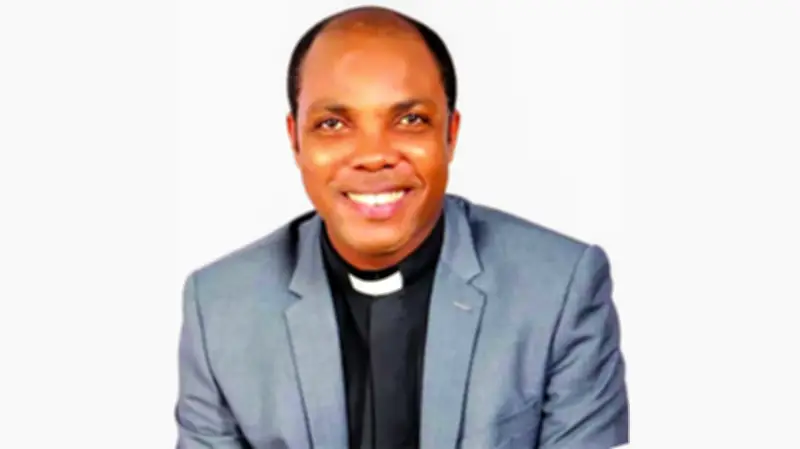
By Stephen Wolemonwu
Defining A Decayed Society
Biblical Imagery
Scripture paints vivid pictures of societal decay: Judges 21:25: “In those days there was no king in Israel; everyone did what was right in his own eyes.” This verse captures anarchy: the collapse of shared authority and moral order. When individuals become their own law, society fragments into chaos.
Isaiah 5:20: “Woe to those who call evil good and good evil, who put darkness for light and light for darkness, who put bitter for sweet and sweet for bitter!” This is moral inversion — the distortion of values where corruption is celebrated and virtue mocked. It is not just sin, but the normalisation of sin.

Together, these passages show that a decayed society is one where truth is blurred, authority is absent, and moral standards are reversed.
Theological Definition
From a theological standpoint, moral decay is fundamentally the rejection of divine order. God’s law provides structure, justice and peace, but when society abandons this order, we experience the following: Chaos replaces harmony; human pride usurps divine authority; judgment becomes inevitable, as seen repeatedly in Israel’s history. Theologically, decay is not merely social dysfunction, rather a rebellion against God, which carries spiritual consequences.
Sociological Manifestation
Where decay is visible in everyday life: Corruption: Leaders exploit power for personal gains, eroding trust in governance. Injustice: The poor and vulnerable are denied fairness, while the powerful manipulate systems. Breakdown of Communal Trust: Neighbours no longer trust one another; institutions lose credibility; cynicism replaces solidarity. Sociology shows that once trust collapses, society cannot function — contracts, laws and even friendships depend on mutual confidence.
Philosophical Note
St. Augustine, in City of God (Book IV, Chapter 4), argued that societies without justice are nothing more than “bands of robbers.” A state may have armies, wealth and laws, but if justice is absent, it is simply organised theft. This philosophical insight reminds us that decay is not only about visible corruption, but also the loss of moral legitimacy. Without justice, power becomes predation, and society degenerates into exploitation.
Integrated Perspective
A decayed society, therefore, can be defined as: Biblically: A people living without divine authority, normalising evil. Theologically: A rejection of God’s order, leading to chaos and judgment. Sociologically: A breakdown of trust, justice, and communal life. Philosophically: A state that loses legitimacy, becoming predatory rather than protective. In essence, decay is not just about crime or poverty; it is the collapse of truth, justice and divine order, leaving society hollow and vulnerable.
Causes Of Decay
Secular Causes
Unregulated Media And Technology: The digital age has given unprecedented access to the human mind. Social media, streaming platforms, and online communities often normalise violence, immorality and materialism. When unchecked, these influences shape values more than schools or families. This is why the Church’s liturgy wisely calls us to pray for those who shape minds such as teachers, journalists and media houses, because their work can either build or erode the moral fabric of society. Illustration: Consider how fake news can destabilise nations or how hyper-sexualised content reshapes youth culture.
Family Breakdown: The family is the first school of virtue. When parental presence is weak, due to migration, divorce or neglect, such children grow without moral anchors. The absence of fathers and mothers in formative years leaves a vacuum often filled by peer pressure or harmful media.
Economic Hardship: Poverty is not only material; it can become moral. When survival is at stake, people may resort to theft, fraud or exploitation. Economic instability breeds desperation and desperation often erodes ethical boundaries.
Materialism: Wealth and possessions are elevated above integrity. The pursuit of “having” eclipses the value of “being.” In such a culture, success is measured not by virtue, but by accumulation.

Weak Institutions: When religious, educational and communal institutions lose credibility, accountability collapses. Corruption thrives where institutions fail to uphold justice and truth.
By The Ven. Stephen Wolemonwu, Rector, The Ibru Ecumenical Centre, Agbarha-Otor [email protected], 08035413812.