The Economic and Financial Crimes Commission (EFCC) has expressed deep concern over widespread financial misconduct in Nigerian universities, placing several top administrators under criminal investigation. The anti-graft agency disclosed that multiple vice chancellors from both public and private institutions are being probed for alleged contract inflation, diversion of student registration fees, and other related financial irregularities.
EFCC Chairman Speaks at Conference
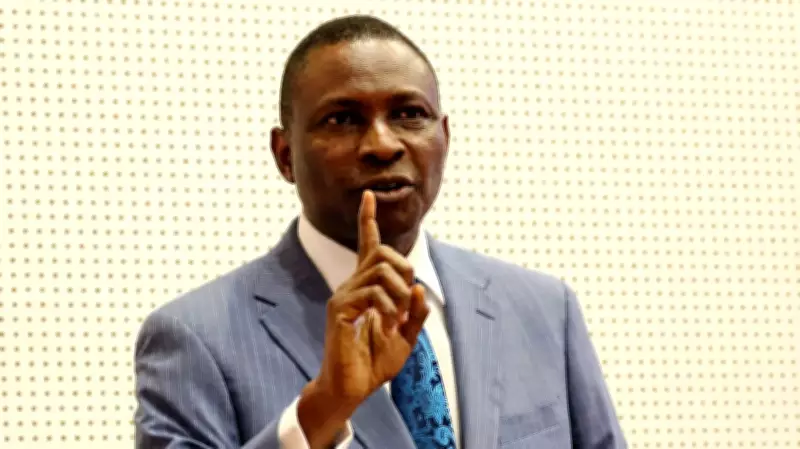
EFCC Chairman Olanipekun Olukayode made this revelation on Tuesday during the opening of the 8th Biennial Conference of the Committee of Pro-Chancellors of State Universities in Nigeria, held in Kano. He asserted that university authorities responsible for managing multi-billion naira budgets from tuition fees and internally generated revenues are not exempt from accountability issues.
Olukayode stressed that the pervasive cases of financial impropriety in tertiary institutions represent not only a loss of public funds but also a betrayal of trust placed in the university system by Nigerian parents, students, taxpayers, and governments.

“The EFCC has investigated cases involving inflated contracts, ghost workers, and diverted student fees in tertiary institutions across the country. It is a matter of fact; just last week, I had to authorize the filing of charges against a vice chancellor who recently left the system,” Olukayode emphasized.
Technology as a Solution
Speaking on the conference theme, “Unlocking the Potentials of Artificial Intelligence: University Governance, Internationalization and Rankings,” the EFCC boss argued that the application of technology in tertiary institutions should become a central norm to prevent accountability leakages. He noted that limited technology adoption exacerbates challenges in payroll administration, encourages procurement malpractices, and leads to poor internal control systems.
While advocating for the adoption of technology-driven systems in higher learning centers, Olukayode questioned how universities found wanting in financial accountability could credibly train future accountants and auditors. “A university that lacks financial accountability cannot credibly train future accountants and auditors. And one that tolerates fraud cannot produce the ethical professionals our economy needs. The university’s integrity is thus a matter of national security, and artificial intelligence offers transformative tools to defend it. However, the application of artificial intelligence is not a silver bullet to all that ails Nigerian universities,” he added.
Capacity and Integrity
Although the EFCC believes limited technology applications exacerbate challenges in payroll administration, encourage procurement malpractices, and lead to poor internet control systems, Olukayode also raised questions about the technical capacity of institutions to carry out such advancements. He advocated for the full integration of artificial intelligence in ethical and financial management in Nigerian universities, calling on management to take advantage of these tools to improve their systems.
Chairman of the Committee of Pro-Chancellors of State-Owned Universities in Nigeria, Professor Ayodeji Omole, explained that the conference serves as a strategic platform for strengthening governance, coherence, building institutional coordination, and advancing the collective interests of public universities in Nigeria. He said the occasion is also designed to enable policy harmonization, collective reflection, and informed engagement with government and regulatory bodies. According to him, participants will exchange ideas on financial management, infrastructural development, staff welfare, and academic standards within the paradigm of increasing institutional coordination and strengthening systemic alignment.