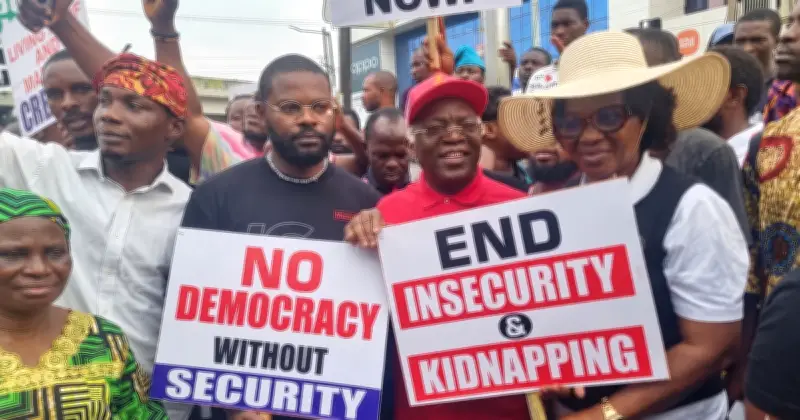
Human rights lawyer Femi Falana, his wife, and their son, rapper and activist Falz, led a protest in Lagos on Friday to mark Democracy Day, demanding urgent government action to address worsening insecurity across Nigeria. The demonstration, held in parts of Lagos, brought together civil society groups, activists, and concerned citizens who marched with placards calling for an end to kidnappings, bandit attacks, and declining safety in the country.
Protesters Vow to Persist
Many protesters chanted the slogan “We no go tire,” expressing their determination to continue demanding accountability from the government. The protest had been announced earlier and drew participants from various walks of life.
Falana Calls for Release of Abducted Schoolchildren
During the protest, Falana raised concerns over the abduction of schoolchildren and their teachers in Oyo State, describing their situation as deeply distressing. “Those kids are suffering. No medical attention, no food,” he said, adding that one of the teachers had reportedly been killed in captivity to pressure authorities into acting swiftly. He called for the immediate and unconditional release of all abducted victims, insisting that the government must do more to protect citizens from repeated attacks by armed groups.

Nigeria Has Civil Rule, Not Democracy, Says Falana
Falana also reflected on the state of governance, stating that Nigeria has not yet attained full democratic practice. “We also want to thank you for coming out today to mark the June 12 anniversary. As you’re well aware there’s no democracy in Nigeria. What we have is civil rule. Civilian administration. The struggle for democracy must continue,” he said. He further remarked, “All of us are in custody one way or another,” describing the impact of insecurity, hardship, and social conditions affecting Nigerians.
Falz Joins Protest
Falz, who has consistently used his platform to speak on governance and social issues, stood in solidarity with other protesters during the march. The June 12 protest comes amid ongoing concerns over insecurity in several parts of Nigeria, including repeated cases of kidnappings and attacks on rural communities and schools.
Participants insisted that Democracy Day should not only be about commemoration but also a reminder for the government to address issues affecting citizens’ daily lives, particularly safety and security.