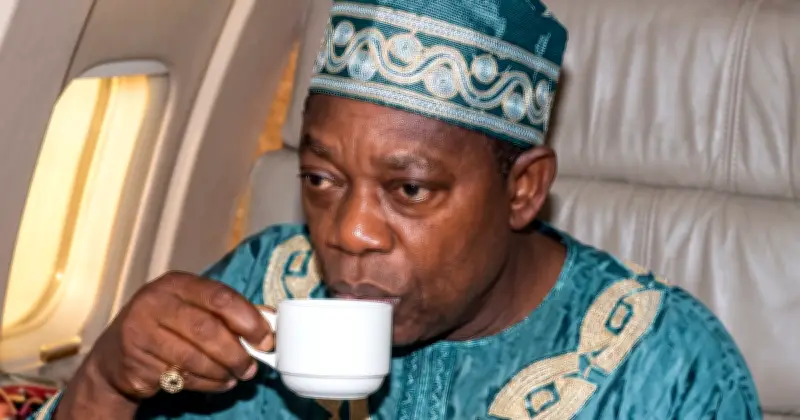
Former Head of State, General Abdulsalami Abubakar (retd.), has dismissed long-standing claims that Chief Moshood Kashimawo Olawale (MKO) Abiola was poisoned, insisting that medical investigations conducted after his death found no evidence of foul play.
Autopsy Findings
In his autobiography, Call of Duty, launched in Abuja during events marking his 84th birthday, Abdulsalami revisited the circumstances surrounding Abiola's death on July 7, 1998. He stated that an autopsy involving pathologists from the United States, Britain, Nigeria, and Canada concluded that Abiola died of natural causes.
“I do not believe Abiola was poisoned. The family requested an autopsy and we assembled American, British, Nigerian and Canadian pathologists to conduct it. The autopsy report attributed his death to natural causes,” Abdulsalami wrote.

Pre-existing Health Conditions
According to Abdulsalami, Abiola had been battling health challenges long before his death. Medical records from 1994 showed that Abiola had an enlarged heart consistent with hypertensive heart disease, suggesting that his health condition may have contributed to his sudden collapse.
“As far back as 1994 when he was arrested by the Abacha Administration for declaring himself President, it was public knowledge that Abiola was managing certain medical conditions which could seriously affect the quality of life of any human being,” he noted.
Events Surrounding His Death
Abiola died while in detention during a meeting with a visiting American delegation that included then United States Undersecretary of State for Political Affairs, Tom Pickering, and then Assistant Secretary of State for African Affairs, Susan Rice. Drawing from Rice's memoir, Tough Love: My Story of the Things Worth Fighting For, Abdulsalami recounted that Abiola began coughing shortly after the meeting started. The coughing reportedly became severe, and he later complained of feeling hot before a doctor was called. The attending physician concluded that Abiola was suffering a heart attack.
Abdulsalami also quoted Pickering's account, which stated that Abiola developed breathing difficulties, became visibly distressed, and was rushed for medical attention, but efforts to save him were unsuccessful.
Reception of the News
The former military ruler recalled how he received news of Abiola's death from his Chief Security Officer, Abdulrasheed Aliyu. “Aliyu, my CSO, called me. As soon as I picked, he said, in a shaky voice, that there was a problem. I asked: 'What problem again?' He said Abiola was dead. My head went blank,” Abdulsalami wrote.
Broader Historical Context
Beyond addressing the controversy surrounding Abiola's death, Abdulsalami also used the book to discuss other significant moments in Nigeria's political history. He stated that former military president, General Ibrahim Babangida, never discussed the annulment of the June 12 election with him despite his position as a senior military officer at the time. He also recounted events surrounding the death of General Sani Abacha and his emergence as Head of State in 1998.
Abiola, widely regarded as the winner of the annulled June 12, 1993 presidential election, died while in detention. His death, which came just a month after Abacha's death, remains one of the most debated episodes in Nigeria's democratic journey. However, Abdulsalami's latest account seeks to lay to rest the theory that the June 12 icon was poisoned while in detention.