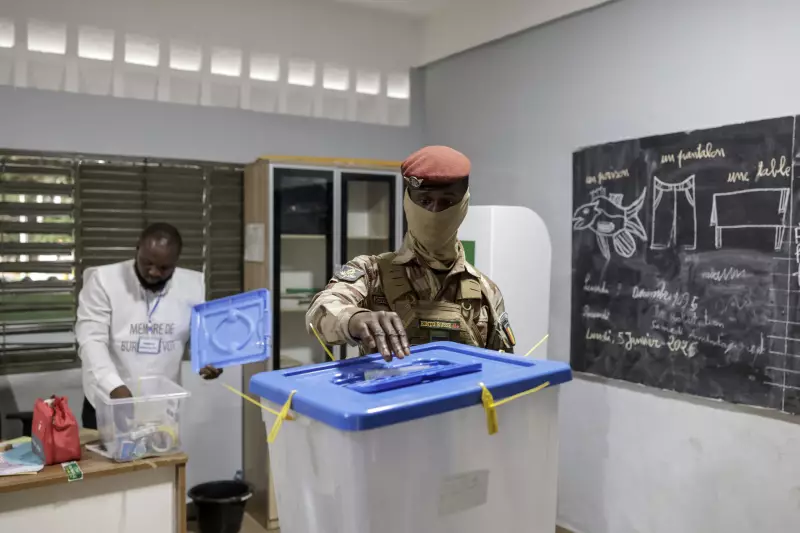
Guinea is heading to the polls this Sunday in a presidential election where victory is almost guaranteed for the man who seized power by force four years ago. General Mamady Doumbouya, who led the coup that ousted President Alpha Conde in September 2021, is now a leading candidate, breaking his earlier promise to restore civilian rule.
A Contested Election and Silenced Opposition
The path to the election has been marked by controversy. All of Guinea's main opposition leaders have been barred from standing, leading critics to label the process a sham. The opposition coalition has called for a boycott of the vote.
United Nations human rights chief Volker Turk stated on Friday that the campaign period was “marked by intimidation of opposition actors, apparently politically motivated enforced disappearances, and constraints on media freedom.”

The rules for candidacy were changed by a new constitution approved in a September referendum, which the opposition also urged voters to boycott. This new document allowed junta members to run for office, directly paving the way for Doumbouya's bid. It also extended presidential terms from five to seven years, renewable once.
Doumbouya's Record and Economic Promises
With his main rivals sidelined, Doumbouya's campaign has focused on his economic and infrastructure record. In a social media video, he highlighted achievements and promised to fight corruption, expressing an ambition to “make Guinea an emerging country.” A key project he pointed to is the recent start of operations at the massive Simandou iron ore mine.
However, analysts question the broader picture. Guinea is a mineral-rich nation, yet 52 percent of its population lives in poverty, according to World Bank data. Gilles Yabi, founder of the West African think tank Wathi, noted that while Guineans are hopeful about such projects, the future of “economic governance” after the election remains unclear.
A Return to Authoritarian Norms?
Experts see this election as a consolidation of power rather than a democratic choice. Some 6.8 million Guineans are eligible to vote, choosing between nine candidates, including the 41-year-old Doumbouya, who is running as an independent. With his remaining rivals relatively unknown, he is expected to win in the first round.
Kabinet Fofana, director of the Conakry-based think tank Les Sondeurs, told AFP that without opposition figures, the election's key stakes are participation and credibility. He also highlighted that this is the first vote since 2006 organized by a government ministry—whose head is appointed by Doumbouya—rather than an independent electoral body.
Gilles Yabi told AFP that under Doumbouya, Guinea has effectively “reverted to what it has essentially known since independence in 1958: authoritarian regimes, whether civilian or military.” Opposition leader and former prime minister Cellou Dalein Diallo, barred from running, has condemned the vote as “an electoral charade.”
Unlike its military-ruled neighbours Mali, Burkina Faso, and Niger, Guinea has maintained good relations with France and other international partners. Polling closes at 1800 GMT on Sunday, with provisional results expected within two days.