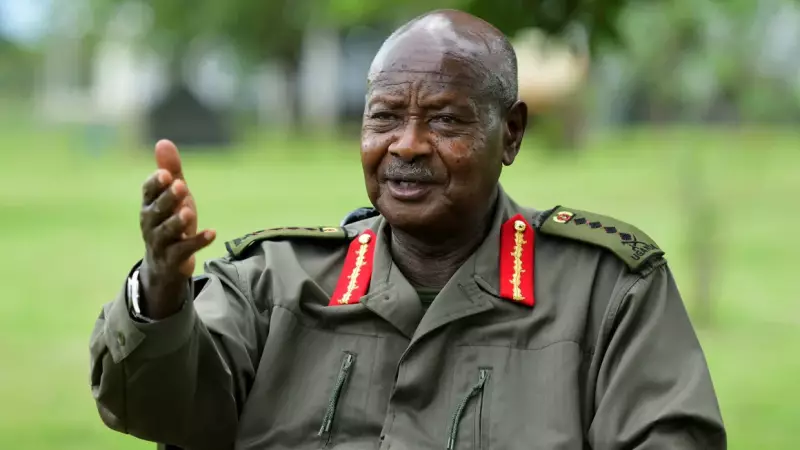
Ugandans faced a chaotic and disrupted start to voting on Thursday, 15 January 2026, as they headed to the polls in an election marked by an internet blackout, significant delays, and a heavy security presence. President Yoweri Museveni, 81, is seeking to extend his four-decade rule against a backdrop of what opposition figures call a deliberate strategy to suppress turnout.
Chaos and Technical Failures at Polling Stations
Voting was supposed to begin early in the morning, but hours later, many polling stations across the country had still not opened. AFP journalists reported that in multiple areas, the process had not started more than two hours after the scheduled time. When voting did eventually begin after long waits, the biometric verification machines, crucial for confirming voters' identities, were malfunctioning in numerous locations.
An election observer in the eastern city of Jinja confirmed the widespread issues, stating there was a "failure of the kit that is meant to identify voters." A ruling party official, speaking anonymously, also acknowledged the problem was extensive, though the cause was unclear. Speculation swirled that the failures might be linked to a government-ordered internet shutdown that had been in effect since Tuesday.

A Climate of Repression and Accusations
The government cut internet access indefinitely earlier in the week, breaking previous promises, citing the need to stop "misinformation" and "incitement to violence." The United Nations labelled the shutdown as "deeply worrying." Museveni's main challenger, the singer-turned-politician Bobi Wine, 43, accused the authorities of deliberately engineering the polling delays to ensure low voter turnout.
Wine, who has styled himself as the "ghetto president," described the election as a "war" and Museveni as a "military dictator." He told AFP on the eve of the vote that the regime was planning to rig the election and brutalise people, and the internet blackout was meant to hide it from the world. His campaign has been met with a police crackdown, with hundreds of his supporters arrested in the run-up to the election.
The other major opposition figure, Kizza Besigye, remains on trial for treason after being abducted in Kenya in 2024 and returned to Uganda. Human Rights Watch has denounced the suspension of ten non-governmental organisations, including election monitors, noting the opposition has faced "brutal repression."
Museveni's Firm Grip and a Nation Divided
Despite the turmoil, Museveni is widely expected to secure a seventh term, leveraging his total control over the state and security forces. Many Ugandans still credit him with bringing stability and economic growth after years of post-independence chaos, though his rule has also been plagued by massive corruption scandals.
Supporters like Angee Abraham Lincoln, 42, in Kampala, praised the peace and security under his party. However, the mood at many polling stations was one of anxiety. "I am worried," said Katomgole Juma, a 48-year-old artisan waiting to vote in central Kampala. "People will be upset because they won't be certain of the result."
President Museveni struck a defiant tone before the election, warning, "Go and vote. Anybody who wants to interfere with your freedom, I will crush them." With a heavy security deployment across the country and police warnings against "criminal acts," Uganda's 2026 election day unfolded as a tense contest between an entrenched leader and a frustrated opposition, with the true will of the voters obscured by technical failures and a state-imposed information vacuum.