In a dramatic response to escalating threats from the United States, several European nations are deploying military personnel to Greenland. This move comes as US President Donald Trump intensifies his rhetoric about forcibly annexing the world's largest island, shaking the foundations of the NATO alliance.
European Forces Rally to Greenland's Defense
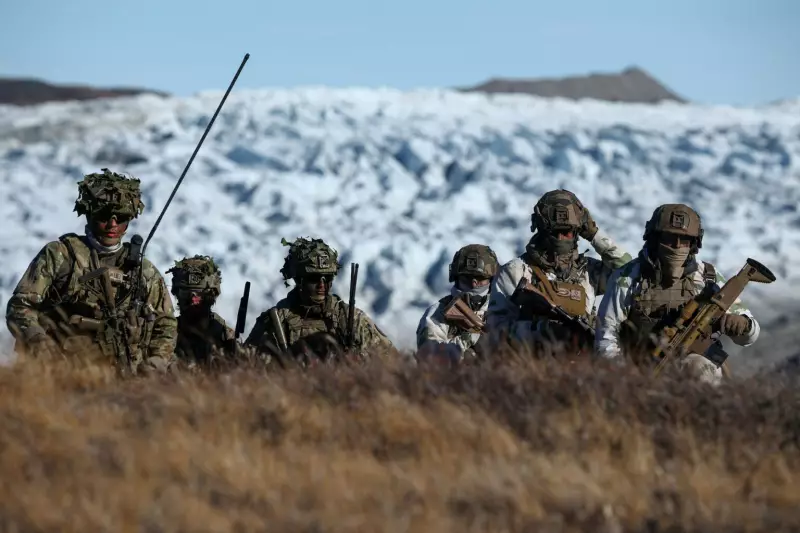
Germany, Sweden, France, and Norway have all confirmed this week that they are sending military personnel to participate in joint exercises with Danish forces in Greenland. Denmark, which handles Greenland's defense, initiated these drills amid extraordinary tensions.
The deployments, while involving small numbers, carry heavy symbolic weight. They represent a clear show of solidarity with Denmark and a rejection of US ambitions over Greenlandian territory. Canada and France have further underlined diplomatic support by announcing plans to open consulates in Nuuk, Greenland's capital, in the coming weeks.

"They come amid extraordinary tensions within NATO, triggered by Trump’s increasingly blunt statements about Greenland," analysts note. The United States already stations about 150 troops at its Pituffik Space Base in northwestern Greenland.
Unprecedented Threat to the NATO Alliance
The core of the crisis lies in President Trump's repeated statements. He has voiced his ambition to seize control of Greenland, including by force if necessary. During a recent press conference, he declared he would "do something on Greenland, whether they like it or not."
These remarks have sent shockwaves through the security alliance. NATO is founded on the principle that an attack on one member is an attack on all. Since Greenland is part of NATO through its association with Denmark, a US threat against it presents an unprecedented scenario of one ally targeting another's territory.
Denmark has warned that any attack on Greenland would effectively mean the end of NATO. In response, it is expanding its military presence on the island in close cooperation with allied nations.
Diplomatic Maneuvers and Military Movements
The European troop announcements coincided with high-level talks. Danish and Greenlandic officials met with US Secretary of State Marco Rubio and Vice President JD Vance. This followed an online statement from Trump that "anything less" than US control of Greenland is unacceptable, arguing NATO would be stronger under US stewardship of the island.
The talks yielded few concrete results. Danish officials called them frank but constructive, while acknowledging fundamental disagreements persist. All sides agreed to establish a high-level working group to find a path forward, expected to meet in the coming weeks.
On the ground, military preparations are underway. Germany's Defense Ministry is sending a reconnaissance team for an exploration mission. Sweden's troops will help prepare for the broader Operation Arctic Endurance, an exercise France has also joined, with its first units already en route. Norway has confirmed its personnel are deploying as well.
Canada has reiterated its firm support for Denmark and Greenland's sovereignty. Its foreign minister plans to travel to Nuuk to open a consulate and reinforce commitment to Arctic security. France confirmed it will open its consulate in early February, a move planned before the current crisis.
French officials have directly urged the United States to stop threatening Greenland, warning that any attack on a fellow NATO member would undermine the alliance and hurt US interests. As troops arrive and diplomats talk, the Arctic has become the unlikely epicenter of a crisis testing the very survival of the Western military alliance.