Pope Leo XIV Champions Peace in Contrast to Trump's Aggressive Stance
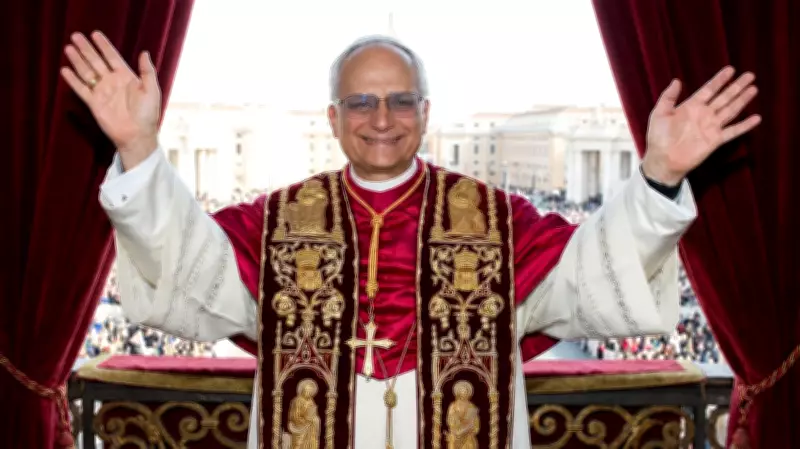
On May 8, 2025, Robert Cardinal Prevost, an American-born cleric from Chicago, was elected as the head of the Catholic Church, choosing the name Pope Leo XIV. The name "Leo," meaning "lion," traditionally symbolizes strength and ferocity, but this pontiff has defied such expectations from the outset. From his first appearance on the balcony of St. Peter's Basilica, where he greeted the world with the words "Brothers and sisters, peace be with you," Pope Leo XIV has consistently preached a message of non-violence and reconciliation.
Theological Foundations of Pope Leo's Peace Advocacy
Pope Leo's understanding of peace is deeply rooted in Christian teachings, particularly the Beatitudes from Jesus Christ's Sermon on the Mount, which declare, "Blessed are the peacemakers, for they shall be called sons of God." He emphasizes that peace is not merely the absence of war but a state inspired by love, justice, and self-mastery, as articulated in the Gospel according to Matthew. This perspective challenges a world often driven by what the Pope describes as a "delusion of military omnipotence," where aggressive tactics overshadow diplomatic efforts.
Influenced by St. Augustine, the great African philosopher and theologian, Pope Leo draws from Augustine's concept of peace as "tranquility of order" (tranquillitas ordinis), where order arises from justice. For Augustine, true peace requires conquering one's own libido dominandi—the lust for power and domination—rather than subduing others. While Augustine did not entirely reject war, formulating the just war theory that permits conflict under specific moral conditions, Pope Leo argues that the ongoing war in Iran fails to meet these criteria, especially when invoked in God's name, which he condemns as blasphemous.

Political and Moral Confrontation with President Trump
The contrast between Pope Leo XIV and former President Donald Trump has become a focal point in global discourse. Pope Leo has repeatedly and unequivocally denounced the war in Iran, framing it as a moral failure that violates the principles of just war theory. In response, Trump has dismissed the Pope as "weak" and "terrible," echoing criticisms similar to those once leveled by philosopher Friedrich Nietzsche against Jesus Christ. Trump's vice president, J.D. Vance, further argued that religious leaders should confine themselves to moral issues, not politics, but Pope Leo counters that war inherently involves morality, and politics, when rightly understood, aims at the common good—a moral project shaped by religious values.
Pope Leo's message extends beyond Trump, addressing all parties involved in conflicts, including Iranians, whom he notes have a poor record on human rights, and others pursuing hegemonic ambitions through violence. He asserts that his pastoral duty obliges him to speak out, especially when threats, such as Trump's to "wipe out an entire civilization," escalate tensions.
Historical Context and Contemporary Relevance
Reflecting on history, Pope Leo highlights how lust for domination has driven events like the trans-Atlantic slave trade and colonialism, where stronger nations exploited weaker ones for economic gain. He connects this to current conflicts, urging a shift from domination to self-conquest as the path to justice. Some Christians critique his stance, citing biblical wars like David versus Goliath, but Pope Leo clarifies that he speaks in the name of Jesus Christ, who preached love for enemies and peacemaking—a challenging yet not erroneous teaching, as evidenced by Jesus' symbolic entry into Jerusalem on a donkey, an animal of peace, rather than a warhorse.
In lighter moments, Pope Leo's role as a peacemaker brings to mind a Nigerian sitcom reference where a character quips, "Blessed are the peacemakers, for they shall be insulted," underscoring the ridicule peace advocates often face. Humor also surfaces in Trump's claim that he influenced the Pope's election, a notion Pope Leo implicitly dismisses as delusional, akin to a rooster taking credit for sunrise.
Father Anthony Akinwale, a professor at Augustine University in Lagos, Nigeria, provides this analysis, emphasizing the ongoing relevance of Pope Leo XIV's peace doctrine in a turbulent world.