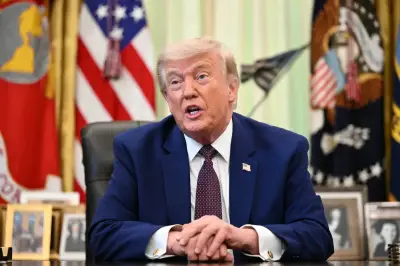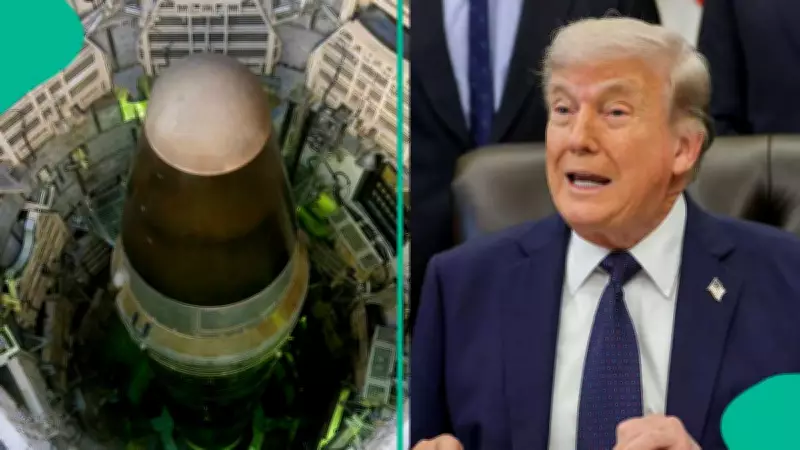
On April 24, 2026, the US State Department released a video featuring President Donald Trump's remarks on the possibility of using nuclear weapons against Iran. In the clip, Trump firmly rejected the idea, emphasizing that nuclear weapons should never be used by any nation.
Trump's Response to Nuclear Weapons Question
When asked by a reporter, "Would you use a nuclear weapon against Iran?" Trump responded, "No. Why would a stupid question like that be asked?" He added, "Why would I use a nuclear weapon when we've totally decimated Iran without it? A nuclear weapon should never be allowed to be used by anybody."
Trump's comments underscore his stance that nuclear weapons are unacceptable for use. His response suggests that the United States has already taken robust measures against Iran without resorting to nuclear arms.

Global Context on Nuclear Weapons
These remarks come at a time when nuclear weapon policy remains a sensitive global issue. Many governments and international organizations continue to stress the importance of preventing nuclear escalation and promoting disarmament.
What Are Nuclear Weapons?
Nuclear weapons are among the most destructive arms ever created, capable of causing massive loss of life and long-term environmental damage. Developed during World War II, they have since become central to global security debates. Their use is heavily restricted under international treaties, with many nations working to prevent proliferation and encourage disarmament. The devastating impact of nuclear weapons lies not only in their immediate blast but also in radiation, which can harm generations. Because of this, world leaders often stress that nuclear weapons should never be used, highlighting the importance of diplomacy and peaceful conflict resolution.
US-Israeli War in Iran
The US-Israeli war in Iran has escalated into a major regional conflict, disrupting global energy markets and drawing in multiple actors across the Middle East. The fighting began with joint US-Israeli strikes on Iran in February 2026 and has since spread to Lebanon, Yemen, and the Strait of Hormuz, creating widespread instability.
The US-Israeli war in Iran erupted on February 28, 2026, when coordinated strikes targeted Iranian military assets and leadership, killing Supreme Leader Ayatollah Ali Khamenei. His son, Mojtaba Khamenei, quickly assumed power, ensuring continuity of Iran's government. Iran retaliated by attacking US bases, Israeli cities, and Gulf infrastructure, while allies like Hezbollah and the Houthis joined the fight. The conflict has disrupted oil flows through the Strait of Hormuz, driving up global energy prices and worsening economic pressures worldwide. Despite temporary ceasefires, tensions remain high, with both sides unwilling to compromise, leaving the Middle East in a fragile state.
List of Countries with Nuclear Weapons
Legit.ng earlier reported that Israel and the United States have continued their offensive attacks on Iran over the allegation that Tehran was building a nuclear weapon, an allegation that the Iranian government has neither denied. The building of nuclear power is becoming the order of the day, as it appears that any country that has it would not be threatened by a world power. However, against the desire of humanity, the likelihood that nuclear weapons would one day be used keeps growing, and the world is becoming more unstable.