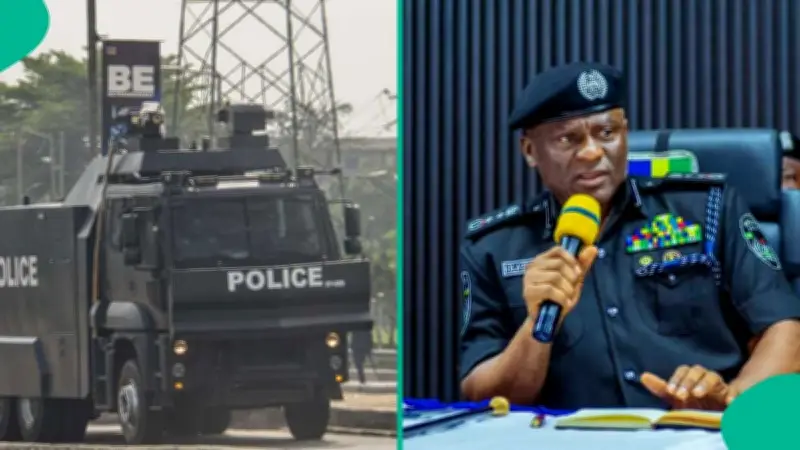
Nigeria's Senate has approved a bill to establish state police, aiming to address the country's diverse security challenges including terrorism, banditry, kidnapping, and communal violence. The bill, passed on June 24, 2026, seeks to create a dual policing structure where state police operate alongside the existing Nigeria Police Force, potentially improving local response times and intelligence gathering. However, concerns about political interference, funding inequalities, and accountability remain central to the debate.
Passage of the State Police Bill
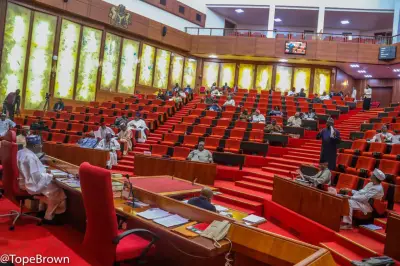
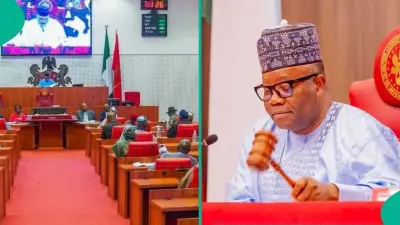
The bill was approved following the presentation of the report by the Senate Committee on the Review of the Constitution, chaired by Senator Barau Jibrin. Senate President Godswill Akpabio announced the passage after more than two-thirds of senators supported the amendment through a manual voting process. Of the 109-member Senate, 87 lawmakers were present, exceeding the 73 votes required for approval.
This reform has sparked discussions on whether state police can provide faster security solutions or create new challenges around accountability and political influence.

Current Centralized Policing System
Nigeria currently operates a centralized policing structure where the Nigeria Police Force is controlled by the Federal Government and headed by the Inspector-General of Police. Recruitment, training, deployment, and command remain under federal authority. Although state governments often provide operational support, they have limited control over police operations within their territories.
Critics argue that this centralized model makes it difficult for security agencies to respond quickly to local threats, especially in a country with diverse communities and complex security challenges. Deputy Speaker of the House of Representatives, Rt. Hon. Benjamin Ndubuisi Kalu, has argued that Nigeria's centralized security system cannot effectively address the country's increasingly diverse security threats.
What State Police Means
If the amendment is approved by at least 24 state assemblies, Nigeria would operate a system where states have their own police services while the federal police handles national responsibilities. Under the proposed bill, a State Police Service would be headed by a Commissioner of Police appointed by the governor and confirmed by the state House of Assembly.
The legislation includes safeguards against abuse. Governors can only issue lawful written directives of a general policy nature on public safety and public order. State police cannot arrest, detain, investigate, or use force against individuals for criticizing the government unless such actions comply with the law. The Commissioner of Police of a state also has protection against arbitrary removal, with suspension or removal requiring due process and approval involving the National Police Council and the state assembly.
Security Experts Support Reform
Security experts have backed the creation of state police, describing it as a potential turning point in Nigeria's security architecture. Commissioner of Police in Cross River State, Rashid Afegbua, called the Senate's action a historic milestone. He stated, "The State Police Bill represents a bold step towards deepening true federalism and addressing the nation's growing security challenges." Afegbua advocated for proactive and technology-driven policing, including dedicated state cybercrime and digital evidence units.
Brigadier-General Bashir Adewinbi emphasized that successful counterterrorism campaigns depend less on firepower and more on intelligence. He noted, "Modern counterterrorism is intelligence-driven. The military can only act effectively when information reaches commanders on time. Most terrorists, kidnappers and bandits operate within communities. Local policing structures are naturally better positioned to identify suspicious movements before attacks happen." He explained that federal police officers posted from distant parts often lack familiarity with local languages, terrain, and social networks.

Potential Benefits: Faster Response and Local Intelligence
Supporters believe state police could improve crime prevention by allowing officers to operate closer to communities. A state-based policing structure could provide faster emergency response, stronger local intelligence networks, and better understanding of criminal activities. A former Special Adviser on Security to the Cross River State Governor, Mr. Rekpene Bassey, called for more proactive and intelligence-driven strategies.
Air Vice Marshal Adebayo Gabriel Kehinde identified poverty, unemployment, illiteracy, poor governance, and competition over natural resources as factors contributing to insecurity. He advocated increased investment in intelligence gathering and technological solutions to strengthen early warning systems.
Key Concerns: Political Interference and Accountability
Critics remain concerned about possible misuse of state police. A major concern is that governors could influence police operations for political reasons, including targeting opponents or suppressing criticism. Human rights lawyer Femi Falana warned that decentralisation without strong safeguards could create new governance challenges. He argued, "Security institutions must serve citizens, not politicians. The danger is not state police itself; the danger is creating state police without adequate constitutional protections and oversight mechanisms."
Funding is another major challenge. While some states may have the financial capacity to maintain effective police services, others may struggle with recruitment, training, equipment, and welfare. Unequal funding could create differences in policing standards across states.
Way Forward: Building Trust and Effective Oversight
Following Senate passage, the bill will proceed to the House of Representatives for concurrence. If approved, it will move to the 36 state Houses of Assembly. At least 24 state assemblies must approve the constitutional amendment before it can become law.
Chief Executive Officer of Beacon Security, Adamu Kabir, stated that the success of state police will depend on establishing a professional, accountable, and properly structured system that prioritizes citizens' safety above political interests. He added, "State police can become a major turning point in Nigeria's security architecture if it is built on professionalism, accountability and respect for citizens' rights. The focus must be on protecting lives and property, not serving political interests."
For ordinary Nigerians facing daily security threats, the expectation remains that any new policing structure must deliver safer communities, quicker response, and renewed confidence in security institutions.