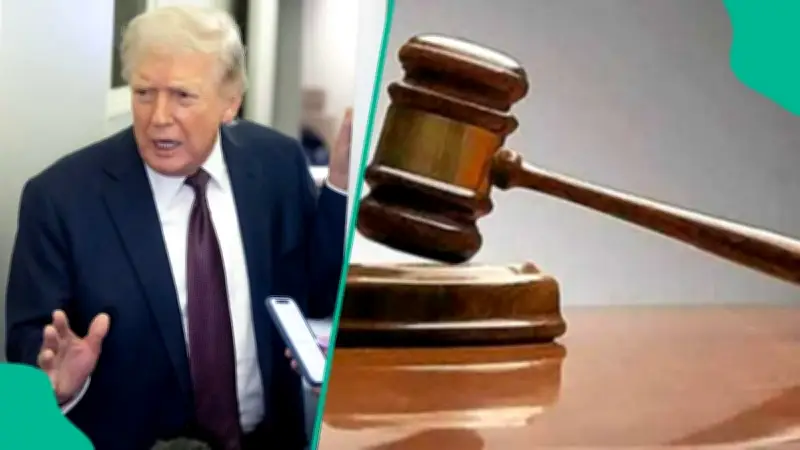
The United States Supreme Court has decisively halted President Donald Trump's effort to curtail birthright citizenship, delivering a 6-3 ruling on the final day of its term. The decision affirms that nearly everyone born on American soil is entitled to US citizenship, upholding a long-standing constitutional principle.
Ruling Details and Implications
The court's majority opinion, supported by six justices, rejected the administration's argument that the 14th Amendment's Citizenship Clause could be reinterpreted to exclude certain groups. The ruling blocks any executive action that would deny citizenship to children born in the US to non-citizen parents. This marks a significant legal defeat for President Trump, who had made immigration restrictions a cornerstone of his policy agenda.
Legal experts note that the decision reinforces the precedent set by the 1898 case United States v. Wong Kim Ark, which established that birthright citizenship applies to all individuals born in the US, regardless of their parents' immigration status. The ruling is expected to have far-reaching consequences for millions of families and could influence future immigration debates.

Political and Social Reactions
The verdict has drawn sharp reactions from both sides of the political aisle. Supporters of birthright citizenship hailed the decision as a victory for civil rights and constitutional integrity. Critics, however, argue that the ruling undermines efforts to control immigration and address what they perceive as abuses of the system. The case had been closely watched by advocacy groups, legal scholars, and policymakers worldwide.
According to the report from Legit.ng, authored by Politics and Current Affairs Editor Bada Yusuf, the Supreme Court's decision came as a disappointment to the Trump administration, which had argued that birthright citizenship encouraged illegal immigration and so-called 'anchor babies.' The ruling effectively nullifies any executive orders or policies that would have restricted this right.
Context and Background
The controversy over birthright citizenship has been a flashpoint in US immigration politics for years. President Trump had previously vowed to end the practice via executive order, prompting legal challenges that eventually reached the highest court. The 6-3 split reflects the ideological divisions on the bench, with conservative justices dissenting. The decision is one of the most consequential of the term, alongside other rulings on religious freedom, environmental regulation, and voting rights.
As the term concludes, the Supreme Court's stance reaffirms the judiciary's role in checking executive power and protecting constitutional guarantees. The ruling is final and cannot be appealed, setting a clear legal standard for future administrations.