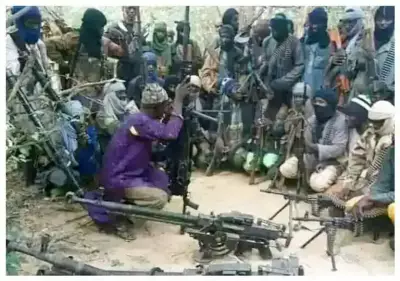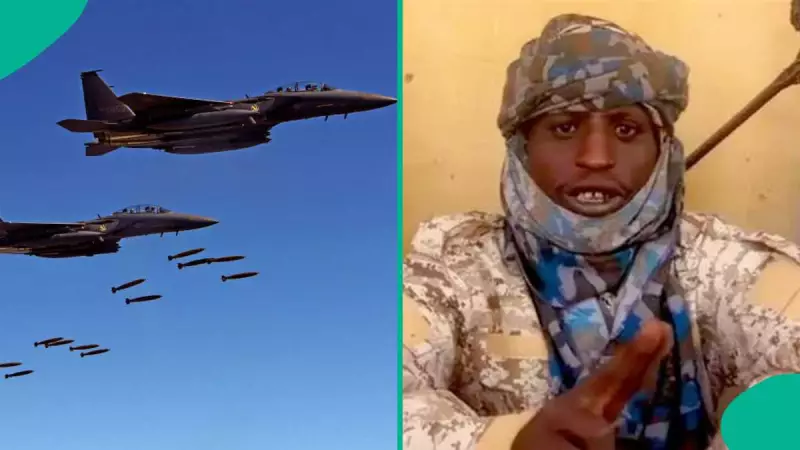
An investigative journalist has broken his silence on the meticulous process that uncovered the true human cost of recent United States military action on Nigerian soil. His exclusive report reveals that 155 members of the Lakurawa terrorist group were killed in two separate missile strikes in Sokoto State.
The Investigation: Piecing Together the Puzzle
Malik Samuel, the journalist behind the findings published by The New Humanitarian, explained that in the vacuum of official public details following the incidents in Jabo and Offa, he embarked on a mission to identify the precise targets and potential misses of the strikes. He leveraged contacts established during recent fieldwork in Nigeria's troubled northwest region.
A day after the December 25 strikes, a critical tip-off came from an unexpected source: a commander within the Lakurawa group based in neighbouring Kebbi State contacted Samuel's local fixer. The commander reported a devastating explosion at the group's camp in Tangaza, Sokoto State, which served as the base for the faction's leader in northwest Nigeria.

Over the ensuing two weeks, Samuel and his fixer conducted a series of short, targeted interviews with insiders from the militant group. Their focus was dual-pronged: to understand the immediate aftermath of the bombardment and to gauge the group's strategic response and future plans.
Revealing the Deadly Tactic
The scope of the inquiry widened upon learning that one missile had targeted Isa Local Government Area, known as the stronghold of notorious bandit leader Bello Turji. This prompted the journalist to also gather intelligence on affiliated bandit groups.
The compiled evidence, verified through trusted informants, painted a grim and tactical picture of the events. The first missile strike killed approximately 30 fighters. As surviving members converged on the site to assess the damage and assist their wounded comrades, a second missile was launched. This follow-up strike proved catastrophic, wiping out those who had gathered to help.
In total, the investigation concluded that an estimated 155 Lakurawa militants lost their lives. This figure includes 19 individuals who were initially injured but later succumbed to their wounds.
Context: A Nation Grappling with Overlapping Crises
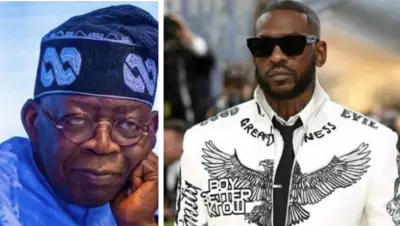
These strikes, ordered by US President Donald Trump and approved by Nigerian President Bola Tinubu, represent one of the most significant foreign-enabled military actions in Nigeria's recent history. Both governments labelled the operations as 'precision strikes' against designated terrorist camps.
Nigeria's Foreign Minister, Yusuf Tuggar, confirmed the government's role, stating that Nigerian authorities provided intelligence support and that President Tinubu had granted final approval for the mission.
This event underscores the severe and complex security challenges plaguing Nigeria. The nation's instability has deep roots but has escalated dramatically since the return to democracy in 1999. The country now contends with a web of violent threats:
- The Boko Haram insurgency in the northeast.
- Rampant banditry and kidnappings in the northwest.
- Militancy in the Niger Delta region.
- Persistent farmer-herder clashes across the Middle Belt.
These overlapping crises have stretched state security institutions to their limits and continue to pose a fundamental challenge to Nigeria's national unity and stability. The journalist's report not only reveals the scale of a specific military action but also highlights the opaque nature of conflict reporting in a region where information is tightly controlled and dangerously difficult to verify.