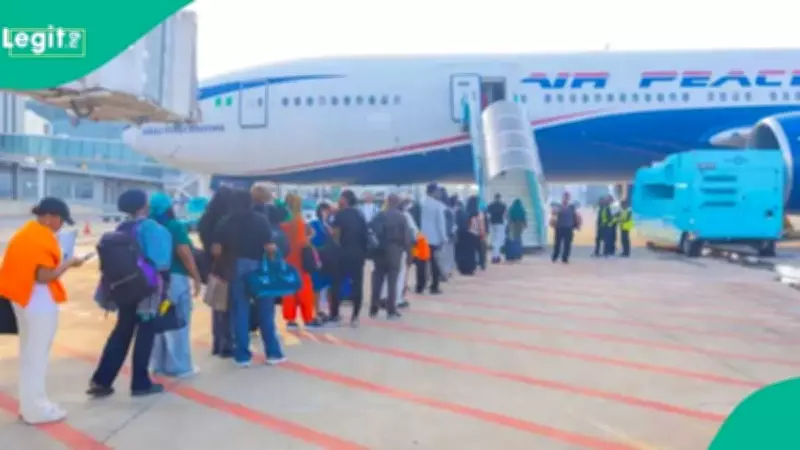
Nigeria's aviation sector is bracing for major disruption as domestic carriers warn they may suspend operations from Thursday, April 30, 2026, over skyrocketing aviation fuel costs. Leading operators, including Air Peace and United Nigeria Airlines, say the situation has become unbearable, raising fears of grounded flights nationwide and stranded passengers.
Industry insiders revealed that after weeks of failed negotiations with both the Federal Government and fuel marketers, airlines may have no choice but to halt services. For thousands of Nigerians who rely on domestic flights for business, medical trips, and urgent travel, the looming shutdown threatens significant disruption.
Jet A1 Prices Soar Beyond Reach
At the heart of the crisis is the dramatic rise in the cost of Jet A1 aviation fuel, which operators say has surged by more than 300 per cent since February. Prices that once hovered around N900 per litre have now jumped to between N2,700 and N3,500, depending on the supplier. This sharp increase has placed airlines under intense financial pressure, with many now operating on razor-thin margins. According to operators, most revenues are being swallowed by fuel expenses alone, leaving little room to cover maintenance, staffing, and other operational costs, The Punch reports. The situation has also sparked questions about pricing transparency, with airline executives urging regulators to investigate the sudden spike.

Government Intervention Falls Short
In an effort to resolve the crisis, Minister of Aviation and Aerospace Development, Festus Keyamo, convened a high-level meeting in Abuja involving airline operators and fuel marketers. At the end of the two-day talks, the government announced a 30 per cent reduction in aviation-related taxes to ease the burden on airlines. While the move was acknowledged as a step in the right direction, operators insist it does little to address the core issue of fuel pricing. Airline executives reportedly rejected the outcome of the meeting, describing it as insufficient to prevent a shutdown.
Operators Issue Ultimatum
Speaking during the discussions, Allen Onyema, Vice President of the Airline Operators of Nigeria (AON), warned that the industry is approaching a breaking point. He noted that while the government has shown willingness to support airlines, the unexplained rise in fuel prices remains the biggest concern. According to him, even suppliers are surprised by the current pricing trends. Operators subsequently issued a seven-day ultimatum, demanding urgent action to stabilise fuel costs. They warned that failure to act could force airlines to suspend operations entirely.
Airlines Struggle to Stay Afloat
Beyond fuel costs, operators say they are grappling with mounting financial strain. Onyema disclosed that airlines are essentially flying just to pay for fuel, leaving little room for profit or reinvestment. Despite debt speculation, industry sources insist that airlines remain up to date with payments to key agencies such as the Federal Airports Authority of Nigeria and the Nigerian Airspace Management Agency. However, the sustainability of operations under current conditions remains in doubt, with safety concerns also taking centre stage.
Fresh Demands to Avert Collapse
In a formal letter dated April 21, the Airline Operators of Nigeria, led by President Abdulmunaf Sarina, called for additional relief measures. Key demands include: immediate suspension of aviation taxes and charges for at least six months; introduction of a non-taxable fuel surcharge; credit compensation from fuel marketers for excessive pricing; and establishment of a tax reform committee for the aviation sector. Operators argue that without these interventions, the rising cost of fuel could cripple the industry, leading to job losses and long-term economic consequences.

Uncertainty Clouds Nigeria's Aviation Sector
As the April 30 deadline approaches, uncertainty continues to grow across the aviation landscape. Another airline executive, speaking anonymously, warned that the shutdown threat is real and imminent. "If nothing is done, no airline will be flying," the source said. For passengers and businesses alike, the coming days will be critical. Unless a last-minute resolution is reached, Nigeria could face one of its most significant aviation disruptions in recent years, with ripple effects across commerce, tourism, and national connectivity.
Aviation Fuel: Air Peace Cuts Abuja-London Flights
Legit.ng earlier reported that Nigeria's leading carrier, Air Peace, has announced a temporary reduction in its Abuja–London flight operations, scaling back from daily service to just three flights per week. The move comes as the airline grapples with a sharp surge in aviation fuel costs and ongoing supply challenges. In a statement shared on its official X account on Saturday, the airline confirmed that the revised schedule will remain in effect until July 1, when normal operations are expected to resume.