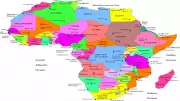
12 of World's Top 20 Fastest-Growing Economies in Africa
African Development Bank President Sidi Ould Tah announced that 12 of the world's 20 fastest-growing economies are in Africa, with GDP growth stabilizing at 4.3% in 2026.


African Development Bank President Sidi Ould Tah announced that 12 of the world's 20 fastest-growing economies are in Africa, with GDP growth stabilizing at 4.3% in 2026.
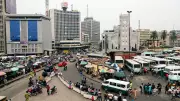
Private sector credit in Nigeria fell by 14.8% (N14 trillion) from February to April 2026, despite a surge in banking liquidity, raising concerns over investment and job creation.
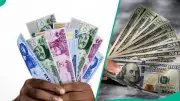
Nigeria's naira gains across official and black markets as FX reserves hit $48.98 billion and GDP grows 3.89%. The naira traded at ₦1,374.92/$1 officially and ₦1,390/$1 on the black market.
Nigeria and the World Bank have agreed to cancel $717.7 million in undisbursed funds under the Power Sector Recovery Operation due to tariff shortfalls and delays.

Shared lists with real-time sync. No signup needed — just open and shop together.
Recommended
Intellectual property experts from across Africa will meet in Nairobi to strategize on leveraging IP for trade, industrialization, and creative economy growth under the AfCFTA.
LOTUS Bank launches subsidised ram sales ahead of Eid-el-Kabir, with residents buying rams for N20,000 amid rising food inflation in Nigeria.

Nigeria's economy grew 3.89% in Q1 2026, driven by telecoms, finance, trade and agriculture, while electricity sector shrank 15.3% and oil production declined.

NISER projects Nigeria's GDP growth to reach 5.02% by 2028, with inflation falling to single digits, driven by fiscal reforms and non-oil sector growth.
Discover the real average salary in Nigeria for 2025. Explore formal sector wages, livable income, and industry comparisons across the country.
Shared lists with real-time sync. No signup needed — just open and shop together.
Recommended
CBN Governor Olayemi Cardoso warns against pressure to resume intervention programs, citing distortion of financial position and weakened monetary policy effectiveness.

NISER forecasts Nigeria's GDP growth to hit 5.02% by 2028, with inflation dropping to single digits, driven by fiscal reforms and non-oil sector expansion.
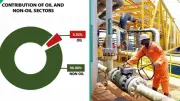
Nigeria's GDP grew 3.89% in Q1 2026, the fastest in 10 years, driven by services, agriculture, and industry. Oil production fell to 1.55 mbpd.

House on the Rock Pastor Paul Adefarasin sparks debate after saying Nigerians who count their wealth in naira are poor due to currency devaluation.

Nigeria's GDP grew 3.89% in Q1 2026, up from 3.13% a year earlier. Agriculture rebounded sharply with 3.15% growth, signaling economic stabilization.
Shared lists with real-time sync. No signup needed — just open and shop together.
Recommended
New research from Web3 Foundation reveals Big Tech and AI companies can earn up to $160,000 in commercial value from a single user's lifetime data, with global value reaching $745 trillion.
Nigeria's GDP grew 3.89% in Q1 2026, down from 4.07% in Q4 2025 but up from 3.13% in Q1 2025, according to NBS data.

African financial institutions and regional blocs are developing payment systems to reduce reliance on the US dollar for intra-African trade, aiming to lower costs and improve efficiency.

Nigeria remains the World Bank's third-largest borrower with $18.5 billion in IDA debt, as fresh loans are sought for power, agriculture, and digital reforms amid rising fiscal pressures.

CBN Governor Olayemi Cardoso warns against renewed pressure for intervention programmes, emphasizing orthodox monetary policy and transparency.
Shared lists with real-time sync. No signup needed — just open and shop together.
Recommended
Global crude prices fall over 5% on optimism over Strait of Hormuz reopening, raising hopes of cheaper petrol in Nigeria. Depot prices vary across regions.
NBS set to publish Q1 2026 GDP and capital importation data, while AfDB annual meetings begin. Dangote plans $2bn refinery fundraising, NCAA sanctions airlines, NCC reviews telecom policy.
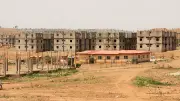
Delegates from 176 countries at WUF13 in Baku call for renewed action to address the global housing crisis, emphasizing integrated solutions and climate resilience.
The MPC left the monetary policy rate unchanged at 26.5%, citing caution amid renewed inflation. Analysts debate the decision's impact on growth, exchange rate, and banking resilience.

Former Edo Governor Godwin Obaseki warns that Africa's projected 2.82 billion population by 2060 may cause a severe socioeconomic crisis unless education and employment systems are rethought.
Shared lists with real-time sync. No signup needed — just open and shop together.
Recommended
Nigeria's duty cuts on essential goods offer short-term relief but risk undermining local production and long-term economic transformation, exposing policy contradictions.

The naira weakened slightly against the US dollar in the official market, closing at N1,375.46/$1. It also fell against the pound and euro. Analysts expect continued CBN intervention.

The Centre for the Promotion of Private Enterprise (CPPE) defends Dangote Refinery against monopoly claims, arguing it corrects decades of fuel import dependency and supports local refining.

Billionaire Abdul Samad Rabiu cites forex pressures, energy costs, and transportation as reasons cement prices exceed N12,000 per bag in Nigeria.

Lagos, Ogun, and Enugu top Nigeria's IGR rankings in Q1 2026, showcasing economic growth and tax reforms as states reduce dependence on federal allocations.
Shared lists with real-time sync. No signup needed — just open and shop together.
Recommended
The UN warns that 35 million Nigerians could face acute hunger between June and August 2026 due to insecurity, inflation, and food shortages, with northern states hardest hit.
