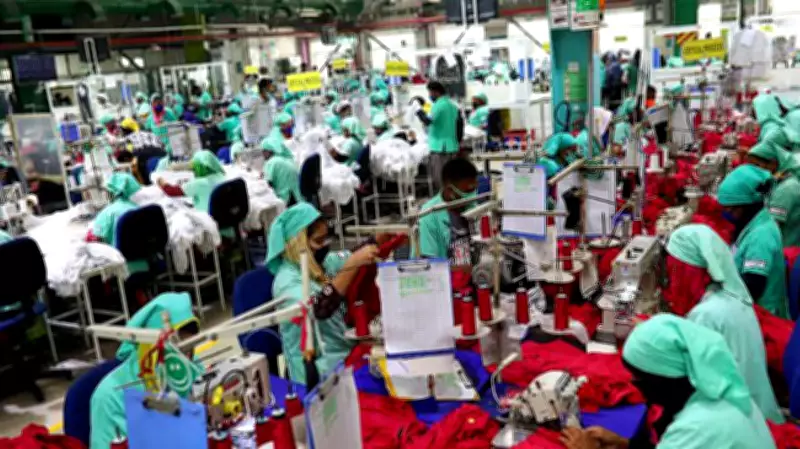
FG Backs Garment Exports as Firm Launches Factory in Abuja
The Minister of Industry, Trade and Investment, Dr. Jumoke Oduwole, has reaffirmed the Federal Government's commitment to supporting young entrepreneurs and industrialists to scale production and expand exports across Africa under the African Continental Free Trade Area (AfCFTA).
Speaking at the launch of Modish Formals and the commissioning of a garment factory by Mo'Afrique in Abuja, Oduwole said the Tinubu administration was prioritising enterprise growth as a pathway to job creation and economic expansion. She urged Mo'Afrique to leverage the AfCFTA platform to penetrate regional and global markets, noting that increased productivity, skills development and competitiveness remained central to government policy.
"I will want to see your garments across the world through the AfCFTA. It is a priority for this administration because it generates employment and contributes to GDP," she said.

The minister charged the entrepreneur to scale up exports to other African countries and beyond, stressing that the government would continue to support businesses in addressing challenges within the operating environment.
Oduwole also commended Nigerian entrepreneurs for their resilience, describing their determination as critical to economic growth despite prevailing constraints. Encouraging other business owners, she noted that while entrepreneurship was challenging, success often begins with small steps. "A business that started 10 years ago in a bedroom has now become a factory. This is commendable," she said.
Earlier, the founder and Creative Director of Mo'Afrique, Ms. Omobolanle Olawale, said the company's expansion marked a major milestone in its evolution from a bespoke fashion brand into a full-scale clothing enterprise. She said the launch of Modish Formals was designed to address gaps in the mass market for professional and institutional wear, including uniforms for military, paramilitary, corporate organisations and schools.
Olawale explained that the newly inaugurated factory, built to global standards, would enhance large-scale production while maintaining quality, adding that it would also create jobs and support skills development. She highlighted challenges facing Nigeria's garment industry, including heavy reliance on imports, smuggling and infrastructure deficits, noting that the country spends about $6 billion annually on imported clothing.
According to her, the new investment is aimed at strengthening local production and positioning Nigerian garments for global competitiveness. She also announced the Modish Scholars initiative, which seeks to provide school uniforms to underprivileged children as part of efforts to address the out-of-school children crisis.
The event was attended by top government officials, captains of industry and other stakeholders, including representatives of the President, ministers and financial sector leaders.