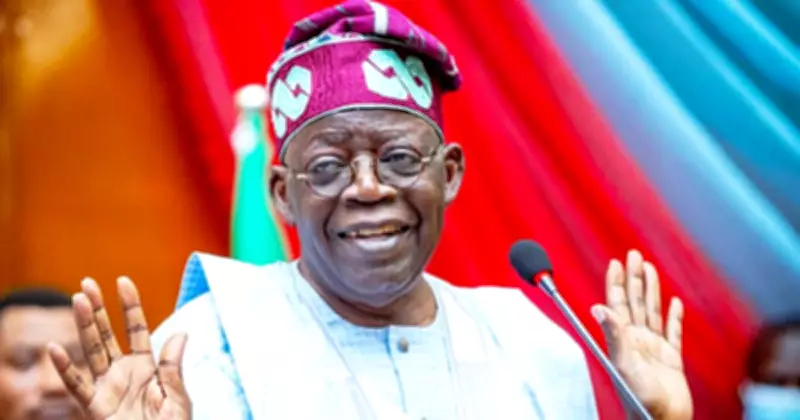
President Bola Tinubu has defended Nigeria's continued borrowing strategy, including a recent $516 million external loan request, insisting that borrowing is a normal financial tool for development and not something to be feared. "Borrowing is not leprosy; we just have to work hard to be able to pay back," Tinubu said, as he justified the government's fiscal approach to financing infrastructure and economic reforms.
The loan request, part of a broader borrowing plan for infrastructure projects, has reignited national debate on Nigeria's rising debt profile and repayment capacity. Official data from the Debt Management Office (DMO) shows that Nigeria's debt situation has worsened significantly in recent years. The country's debt-to-GDP ratio rose from about 39.8% in Q3 2023 to over 40.5% by the end of 2023, and further climbed to about 52.25% by the end of 2024, mainly due to new borrowings and naira devaluation impacts on external debt stock.
By early 2025, Nigeria's total public debt was estimated at ₦159 trillion, with debt levels representing more than half of the country's GDP following economic rebasing. This marks a sharp increase compared to the period before Tinubu assumed office in May 2023, when Nigeria's debt-to-GDP ratio hovered around 38% to 40%, already close to the government's self-imposed threshold but still significantly lower than current levels.

The President, however, maintains that borrowing is necessary to fund critical infrastructure, stimulate growth, and bridge Nigeria's long-standing development gap. Government officials argue that many of the loans are tied to capital projects expected to improve revenue generation in the long term. Despite this position, opposition figures continue to raise concerns over the pace of borrowing. Critics argue that rising debt servicing costs could constrain government revenue, especially amid inflationary pressures and high living costs affecting citizens. Former Vice President Atiku Abubakar and other commentators have repeatedly warned that Nigeria must avoid excessive dependence on external loans without strong transparency and revenue reforms.
The debate has intensified as Nigeria also faces rising debt service obligations, with a large portion of government revenue now directed toward loan repayments rather than capital investment. While the administration insists that reforms are already improving fiscal stability, including efforts to boost revenue collection, many Nigerians remain divided over whether borrowing is a sustainable path for economic recovery. As discussions continue, Tinubu's remarks are expected to further fuel national conversation on debt management, economic priorities, and the future of Nigeria's financial independence.