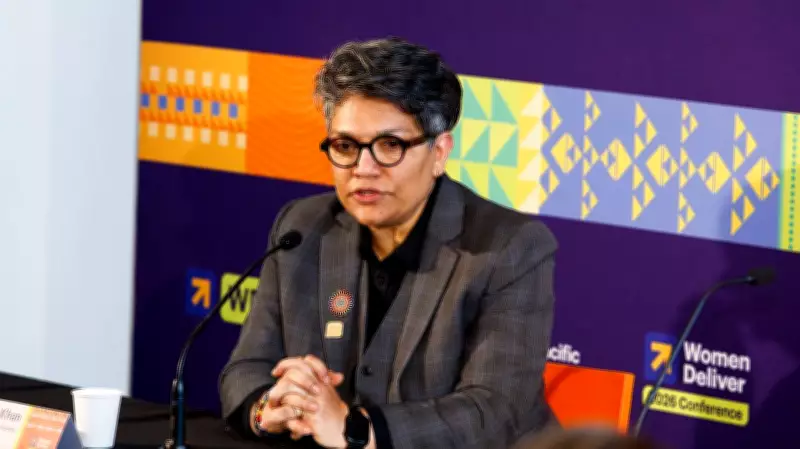
Dr. Maliha Khan, President and Chief Executive Officer of Women Deliver, has called on Nigeria to translate existing policy frameworks into tangible outcomes for women and girls. Speaking at the ongoing Women Deliver conference in Narrm, Melbourne, she emphasized that despite significant progress, the country must address systemic gaps in implementation.
A Career Dedicated to Gender Equality
With over three decades in global development, Dr. Khan’s journey began in Pakistan, working with marginalized communities. She has held leadership roles at CARE, Oxfam, and the Malala Fund. Reflecting on her career, she noted, “I started questioning why international agencies operate in certain ways. Now, we are hosting nearly 6,000 people in Melbourne, which is exciting.”
Progress and Challenges for Women and Girls
Dr. Khan highlighted transformative changes over her lifetime. “Early in my career, we needed permission from village elders to speak with women. Now, resistance to girls’ education is understood as a matter of access and quality, not unwillingness,” she said. She stressed that younger generations will demand even more, pushing for a better world.

Policy and Implementation in Nigeria
Addressing Africa, particularly Nigeria, Dr. Khan acknowledged existing frameworks but urged action. “Many frameworks exist but often fail to translate into action. We must stop being overly critical of ourselves and recognize progress despite colonial and neocolonial challenges,” she stated. She identified dependency on international systems for essential services like reproductive health as unsustainable. “The priority is rebuilding the social contract between citizens and government. Governments must be accountable for education, healthcare, security, and economic opportunity.”
Women’s Political Representation Ahead of 2027
With Nigeria approaching the 2027 elections, Dr. Khan noted dual trends: vibrant civil society and a well-funded global anti-rights movement. “Rights are not Western; they are fundamental. Young people will not accept regression. They will find ways to advance gender equality,” she asserted.
From Conversation to Impact
Responding to criticism that conferences are all talk, Dr. Khan argued that dialogue is essential for change. “Human progress is built on conversation, dialogue, and collective thinking. Impact may not be immediate, but real change often traces back to moments like these,” she explained. She cited the Beijing Declaration as an example of lasting influence.
The Power of the Melbourne Declaration
Dr. Khan emphasized that the strength of declarations lies in resonance. “If people read it and carry its ideas into their own spaces, that is where power comes from. Real power comes from repetition and shared belief, demanding a world that works for women and girls,” she concluded.