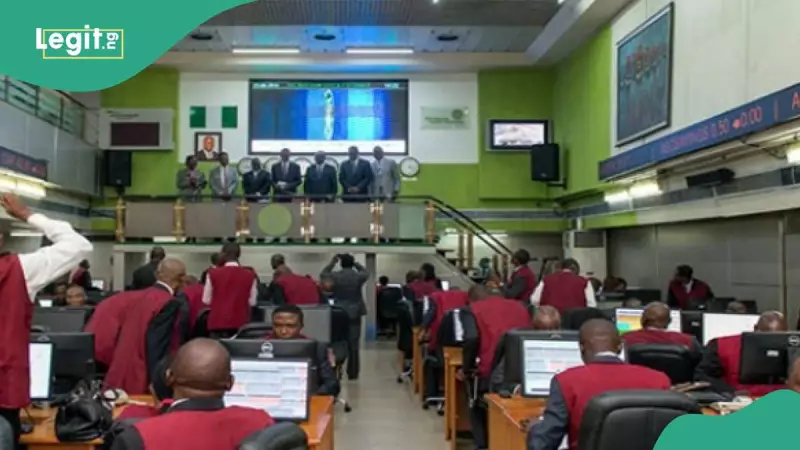
The Nigerian Exchange Limited (NGX) has formally removed ASO Savings and Loans Plc from its trading platform, marking a definitive end to the primary mortgage bank's presence in the nation's capital market. This decisive action, approved by the Board of NGX Regulation Limited, was a direct consequence of the Central Bank of Nigeria (CBN) revoking the company's operating licence.
Regulatory Enforcement Leaves NGX With No Choice
The delisting, announced on January 18, 2026, was not a discretionary penalty by the Exchange but an unavoidable procedural outcome. Under the NGX's listing rules, companies in regulated sectors must maintain a valid licence from their primary regulator. Once the CBN withdrew ASO's licence, the firm immediately failed to meet this fundamental requirement for continued quotation.
This event underscores the tight alignment between sector regulators like the CBN and the capital market authorities, especially within Nigeria's financial services industry. The move signals that regulatory non-compliance can have immediate and severe consequences for a company's market status.

CBN's Zero-Tolerance Stance on Compliance Failures
The licence revocation reflects the apex bank's increasingly stringent supervisory approach. In recent years, the CBN has demonstrated zero tolerance for deficiencies in areas including capital adequacy, corporate governance, liquidity management, and risk controls. While the specific infractions that led to ASO's downfall remain within the CBN's confidential regulatory domain, the message to the entire financial sector is clear: serious compliance failures now carry terminal repercussions.
This posture is part of the CBN's broader determination to sanitize Nigeria's financial system, a process that can involve painful fallout for institutions that fail to meet the required standards. The action against ASO Savings and Loans serves as a stark warning to other banks and mortgage institutions.
Shareholders Bear the Ultimate Brunt of the Collapse
The most devastating impact of this regulatory and market action is borne by the company's shareholders. With the delisting, investors have effectively lost the entire market value of their holdings in ASO Savings and Loans. Liquidity has evaporated, and price discovery has ceased, eliminating any opportunity to sell shares on the secondary market.
For many retail investors, this loss is total. In resolution or winding-down scenarios involving financial institutions, equity holders typically rank last in claims, often receiving little to no residual value after depositors and other creditors are settled. This outcome provides a sobering lesson on the acute regulatory risk inherent in investing in heavily regulated industries like banking.
The CBN's statement, signed by its Acting Director of Corporate Communications, Mrs. Hakama Sidi Ali, confirmed that the licence revocation was executed under the powers granted by the Banks and Other Financial Institutions Act (BOFIA) 2020 and the Revised Guidelines for Mortgage Banks in Nigeria. The apex bank cited the action as part of its efforts to reposition the mortgage sub-sector and strengthen overall regulatory compliance.
This episode with ASO Savings and Loans Plc stands as a cautionary tale for the market, highlighting that beyond standard market risks, investments in regulated entities carry the additional weight of regulatory risk, where a single adverse decision can erase years of investor capital.