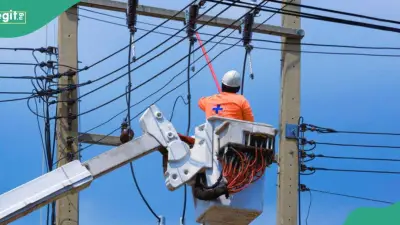
A leading industry expert has issued a compelling call for Nigeria to embrace digital innovation and modern software models to overhaul its beleaguered energy sector. The push aims to address chronic issues of access and reliability that hamper economic growth.
Nigeria's Grid Under Severe Strain
Elijah Daniel, the Country Sales Director for Process Automation & Software, English-speaking Africa at Schneider Electric, painted a stark picture of the current system. He outlined that Nigeria's energy network, structured around generation, transmission, and distribution, is buckling under immense pressure.
Key challenges include transmission bottlenecks, aging infrastructure, a critical demand-supply imbalance, and persistent gas supply issues. Daniel was unequivocal in his assessment, stating that the existing grid is incapable of meeting the demands of a rapidly expanding urban population and growing industries.

"As the country's population surges past 220 million, the national grid is simply stretched too thin," he explained, highlighting the scale of the problem.
The Digital Toolkit for a Modern Grid
Daniel identified a suite of technologies as critical to the solution. He stressed the urgent need for investment in the Internet of Things (IoT), advanced analytics, digital control systems, and notably, Software as a Service (SaaS) platforms.
The adoption of these digital tools, he argued, would do more than just optimize electricity distribution. They would enable proactive maintenance of infrastructure, significantly reduce downtime, and lead to more intelligent management of the entire energy landscape.
Focusing on the SaaS model, Daniel highlighted its potential to lower barriers to entry. This approach eliminates the need for massive upfront capital expenditure, allowing energy providers to subscribe to software platforms that manage operations on a flexible, pay-as-you-go basis.
Localisation: The Make-or-Break Factor for SaaS
However, Daniel cautioned that for SaaS adoption to truly take root in Nigeria, local relevance is non-negotiable. He outlined essential steps for service providers:
- Integrating with local payment gateways to ease transactions.
- Investing in robust training and support ecosystems for users.
- Ensuring software is localised and can be deployed in modular stages.
"Localisation of software, modular deployment, and policy alignment will therefore be essential to ensuring SaaS becomes a viable and valuable tool in Nigeria's energy toolkit," he affirmed.
Technology Alone Is Not a Silver Bullet
Despite his strong advocacy for digital solutions, Daniel offered a crucial reality check. He emphasised that technology by itself cannot resolve Nigeria's deep-seated power challenges.
Meaningful and lasting progress, he concluded, is contingent on the alignment of three critical pillars: coherent government policy, cost-reflective electricity tariffs, and sustained infrastructure investment. Only with this holistic approach can digital innovation deliver its full transformative potential for Nigeria's energy future.