Child marriage remains one of the most persistent violations of girls' rights globally, cutting across regions, cultures, and income levels. An estimated 12 million girls are married every year worldwide, a reality that continues to undermine education, health outcomes, and economic mobility. In Nigeria, the crisis is particularly acute. Approximately 30 to 42 per cent of girls are married before their eighteenth birthday, while about 12 to 16 per cent are married before age 15. In some regions, more than half of women aged 20 to 24 were married as children, reinforcing the country's position among those with the highest number of child brides globally.
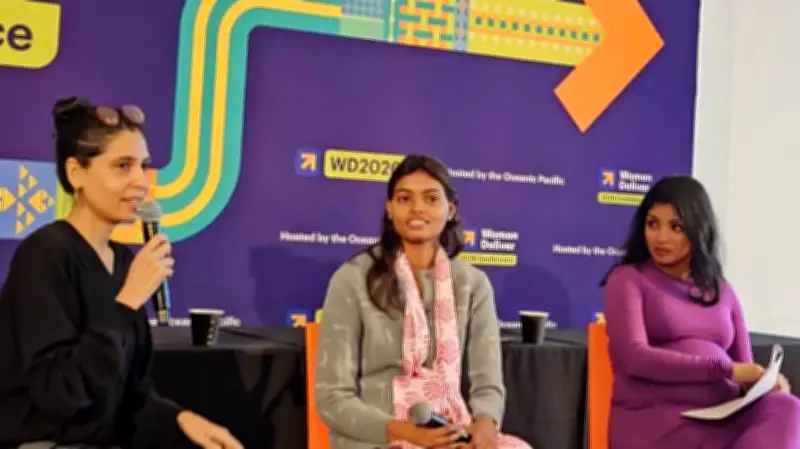
It was against this backdrop that a session titled “I Am My Own Leader: One Girl’s Fight Against Child Marriage” convened at the ongoing Women Deliver 2026 Conference in Melbourne. Hosted by The Hunger Project, the conversation, anchored on adolescent girls, child marriage, and grassroots leadership, moved beyond policy framing to centre lived experience as a driver of change.
At the heart of the session was the story of Khushi Gupta, a 20-year-old first year university student from Chitouli, Block Tilouthu, District Rohtas in India, whose journey reflects the realities faced by millions of girls navigating poverty, gender norms, and systemic exclusion. For many adolescent girls in rural Bihar, life is shaped by poverty, restricted mobility, and deeply rooted gender norms. Decisions about education, marriage, health, and work are often made for them, not by them. Safe spaces where girls can gather, speak freely, learn about their rights, and imagine a different future are rare.

Born into an economically and socially marginalised family, Khushi grew up witnessing instability and hardship. Her father abandoned his responsibilities, leaving her mother to raise five children through daily wage labour. As the eldest daughter, Khushi carried domestic burdens from a young age and dropped out of school after Class 8. Like many girls in her village, she had little exposure to the world outside, information, or opportunities.
“I was called Khushi, but there was no happiness in my life,” she recalled. Her story, while deeply personal, mirrors the structural barriers confronting adolescent girls globally. What distinguishes her trajectory is the point of intervention. In 2021, The Hunger Project India supported the formation of a Girls Collective in her village, creating a community-based platform where girls could gather, learn, and organise. “For the first time, adolescent girls had access to a safe space where they could sit together without fear, speak openly, ask questions, and learn.”
Through the collective, Khushi engaged in structured discussions on girls' rights, education, health, and the consequences of early marriage. The space also fostered peer support and leadership, enabling girls to articulate their aspirations and challenge entrenched norms. Within months, she made the decision to return to school, re-enrolling in Class 9. When faced with pressure to marry during Class 10, she resisted. Each time, Khushi negotiated for time, time to study, to work, and to become financially independent. Her resistance evolved into advocacy. Supported by the collective, she not only delayed marriage but also became a voice within her community, demonstrating how grassroots leadership can emerge from access, awareness, and solidarity.
Communications Lead at The Hunger Project India, Surbhi Mahajan, said the initiative is a targeted response to a critical vulnerability window. “We work with adolescent girls between 13 and 17 years, which is the most vulnerable age in terms of child and early marriage. The idea is to create a safe space that often does not exist, either in households or in schools. It is within the community where girls can come together.” She emphasised that the model prioritises voice and agency over prescriptive interventions. “We are not telling girls what to become. We are ensuring they understand their rights, that they have access to information, and that they develop the confidence to speak about issues that affect them, from menstrual hygiene to accessing healthcare, to staying in school.”

Mahajan noted that the approach extends beyond the girls themselves to families and local systems. “There is a lot of engagement with parents. Initially there is resistance, questions about why girls should join such spaces. But through continuous dialogue, parents begin to see the value, especially when girls return to school or access scholarships.” Across communities, she said, the impact is becoming visible in both individual and institutional shifts. “Girls are now part of school management committees. They are demanding better facilities, ensuring teachers are present, asking for toilets to be functional, and raising issues around access to sanitary products. These are changes that come when girls feel they have a voice.” She added that the programme also strengthens linkages to local governance structures. “We help girls understand the systems around them, from village councils to healthcare centres, so they know where to go and how to demand services. It is about building confidence and collective strength.”