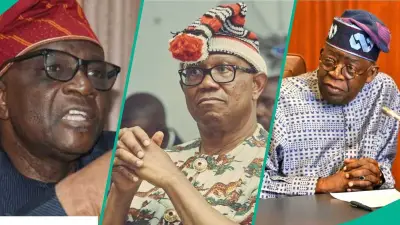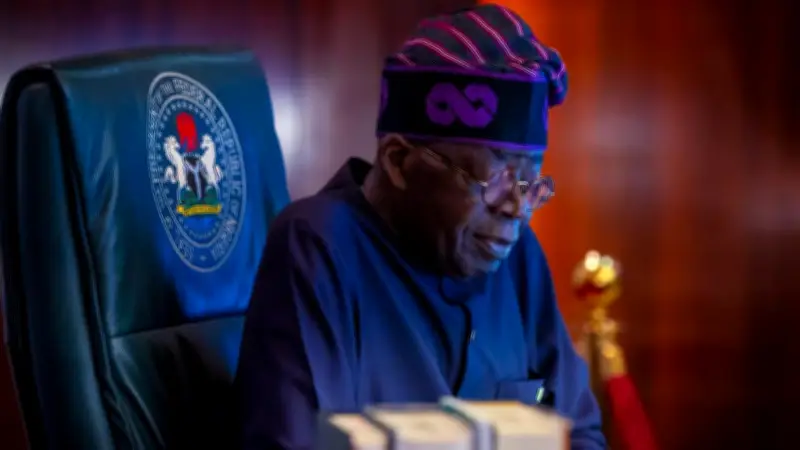
When President Bola Ahmed Tinubu presented his 2024 budget proposals to Nigeria's National Assembly, he prioritized human asset development, poverty reduction, and fighting insecurity. However, in early February, his spokesperson Bayo Onanuga claimed that 133 million multi-dimensionally poor Nigerians were the responsibility of state and local governments, not the Federal Government. That same day, Vice-President Kashim Shettima rebutted this, emphasizing federal responsibility for poverty elimination during the launch of the South-East Development Commission (SEDC) stakeholder consultation for its South-East Vision 2050 (SEV2050) plan.
Vice-President Shettima's Vision
At the Enugu event, Shettima stressed that poverty elimination must be inclusive, sustainable, and anchored on peace and productivity. The SEDC is one of seven regional development commissions under President Tinubu's Ministry of Regional Development, each representing a geo-political zone, alongside the older Niger Delta Development Commission (NDDC). SEV2050 served as a political pitch, successfully garnering support from all five south-east governors—a feat not achieved by the north-west commission earlier this year.
The SEDC's Unique Mission
The SEDC Act of 2024 mandates the commission to manage funds from the Federation Account for reconstructing infrastructure damaged by the Civil War. It is the only commission with an explicit post-war reconstruction mission. Anambra Governor Chukwuma Soludo noted the region faces recovery from two wars: the Nigeria-Biafra war (ending January 15, 1970) and an internal self-destruction war since 2021. He argued that the unfulfilled promise of post-war rehabilitation made the second war inevitable.

Challenges Confronting the SEDC
The SEV2050 consultation highlighted three major challenges. First, a crisis of mismatched expectations: Governor Soludo urged realism but also demanded a Marshall Plan for the south-east, including regional security and super inter-state infrastructure. However, leading on security could antagonize governors, and leading on infrastructure would be a fool's errand. Additionally, the SEDC received only N16 billion in its first 16 months, with no capital funds initially.
Second, the commission needs a viable business model. President Tinubu did not clearly articulate a mission for the regional commissions, leaving them to navigate bureaucratic complexities. Citizens crave immediate attention, while political elites see a patronage vehicle like the NDDC, which abandoned over 12,000 of 13,377 projects after spending trillions. Replicating this would be fatal for the SEDC; failing to do so invites blackmail under oversight guise.
Third, political extortion looms. The Enugu event featured the Vice-President, all south-east governors, and the Speaker's representative, but notably absent were Senate SEDC Committee Chairman Orji Uzor Kalu, House counterpart Chris Nkwonta, and Deputy Speaker Benjamin Kalu. Senator Kalu sent his daughter, who holds no relevant office. This near collective absence signals potential opposition.
Conclusion
The SEV2050 event succeeded in generating goodwill and ideas, but the SEDC will face adversaries. Post-war reconstruction is existential, and the commission lacks resources for errors like the NDDC. If it confines its mission and secures protection from political extortion, it may build a durable business model for its historic task.