Stakeholders in Ndiowu, Anambra State, have raised an alarm over alleged interference by state officials in the community's process to elect a new traditional ruler (Igwe). They have accused the Commissioner for Local Government, Hon. TonyCollins Nwabunwanne, and the Mayor of Orumba North, Hon. Casmir Nwafor, of attempting to impose an election process that sidelines the community's constitution and the will of the people.
Community Leaders Reject Imposed Election Plans
The crisis stems from a twelve-year vacancy on the traditional stool following the death of the former Igwe. The situation escalated recently when the Commissioner allegedly decided to set aside the Ndiowu community's constitution. He unilaterally fixed Monday, January 12, 2026, as the election date, just two days after a scheduled community General Assembly meeting meant to deliberate on the process.
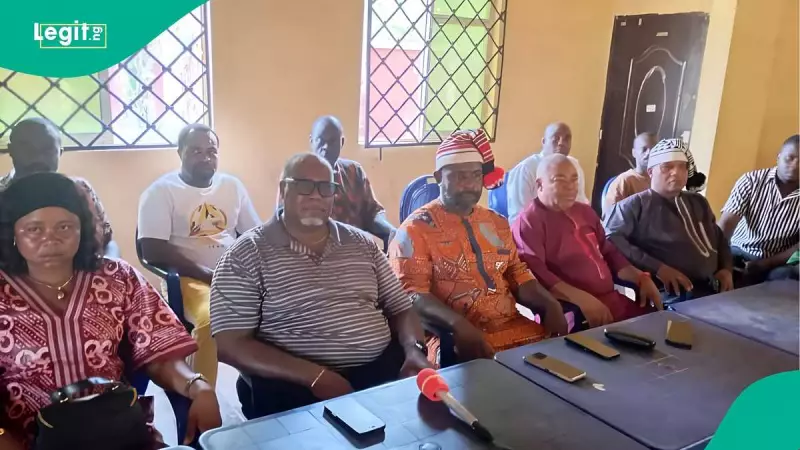
During a protest meeting held at the community civic center on Sunday, January 11, 2026, stakeholders from across Ndiowu's nine villages expressed their frustration. The gathering included village chairmen, women leaders, past presidents-general, youth leaders, and the Umuada Ndiowu.

Leading the protest, a former President General of the Ndiowu Town Union (NTU), Engr. Chike Emenike, stated that the officials' stance was biased. He revealed that after a consultative meeting with the state government on January 6, 2026, it was agreed that no election date would be set without community consensus. "This is not what we agreed to. There is a hidden agenda. This is a slap to our constitution," Emenike declared.
Key Points of Contention Outlined by Community
The community leaders listed several directives from the Commissioner that they find unacceptable:
- Exclusion of Women: The Commissioner allegedly ordered that women would not be allowed to vote, a move that contradicts decades of practice in Ndiowu's affairs.
- Suspension of Constitution: Plans to set aside the community's constitution without any legal basis or court order.
- Secret Ballot System: An intention to impose a secret ballot method, which is not provided for in their constitution and could compromise transparency.
- External Electoral Committee: The Commissioner plans to appoint the electoral committee himself, rather than allowing an independent committee from within Ndiowu.
"We reject any voting system that excludes women of Ndiowu, who have always voted and will continue to do so," Emenike asserted on behalf of the community.
Appeal to Governor Soludo to Prevent Crisis
The community has now called on Anambra State Governor, Professor Charles Soludo, to urgently intervene and cancel the election scheduled for January 12. They argue that the forced process could ignite a crisis in the otherwise peaceful town.
Speaking on behalf of the women, leader Mrs. Ifeyinwa Nwafor challenged the logic of excluding women from the vote. "They should answer this question first: the Igwe they're trying to elect, shall he rule over the male folk alone?" she asked, vowing that the women would resist the move.
The chairman of Umudiabor village, Mazi Uchenna Iloh, who spoke for all nine village chairmen, requested that the election be postponed to April 2026. This, he said, would allow for adequate consultation and preparation. He also emphasized that according to the town's rotational arrangement, it is the turn of the Ufele quarter to produce the next Igwe, and this should not be distorted.
Youth President, Comrade Onyeka Okeke, expressed support for Governor Soludo's administration but pleaded for peace. "An agent of the state government should not be seen as igniting trouble in a peaceful town like Ndiowu," he stated. The youths also advocated for the retention of the Option A4 voting method and the inclusion of women in the process.
The community's unified stance presents a direct challenge to the state officials' authority over the traditional selection process. They have drawn a line, insisting that the sovereignty of Ndiowu to choose its leader according to its own laws must be respected to avoid a major breakdown of law and order.