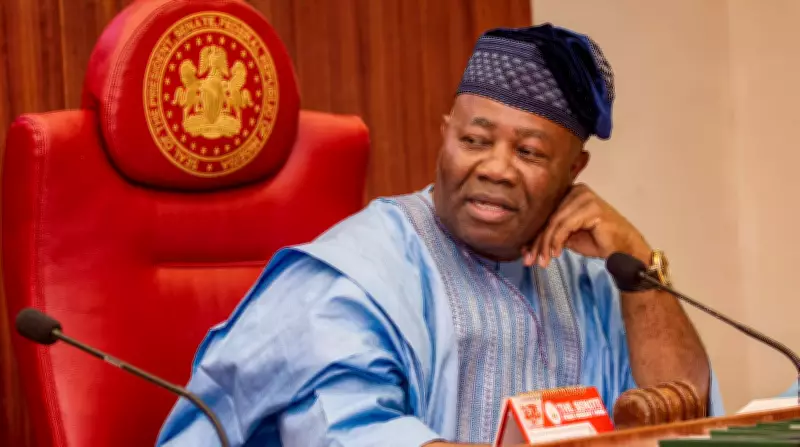
What began as a routine legislative procedure on Wednesday spiraled into a high-voltage confrontation in the Senate, as Senate President Godswill Akpabio and Senator Adams Oshiomhole engaged in a dramatic face-off that exposed simmering political tensions tied to the 2027 power game.
Procedural Trigger Escalates
The immediate trigger was procedural: Oshiomhole attempted to raise a point of order just as Akpabio moved to confirm the Votes and Proceedings of the previous sitting. However, the Senate President's refusal to recognize him, despite repeated shouts of “point of order,” quickly transformed the moment into a charged standoff.
Eyewitnesses say Oshiomhole appeared determined to be heard, repeatedly interrupting proceedings in a manner that unsettled the chamber. Attempts by Chief Whip Mohammed Monguno to restore calm failed, as the Edo North senator pressed on.

Akpabio Assert Authority
In a stern and calculated response, Akpabio asserted his authority, invoking the Senate Standing Orders and reading out provisions that underline his sweeping powers to control debate, interpret rules, and discipline erring lawmakers.
“The rules and laws governing the Senate Chamber… are clearly defined,” he said, before reeling off his constitutional and procedural powers. He did not stop there. “Let me be clear… many people may not have seen this order,” Akpabio added pointedly, in remarks that drew murmurs across the chamber.
As the exchange intensified, he issued a direct warning: any senator who becomes unruly would be asked to leave. “This is the final warning,” he declared.
Deeper Political Undertones
Beneath the surface, the clash carried deeper political undertones. Multiple sources within the National Assembly suggest Oshiomhole’s insistence on raising a point of order may not have been merely procedural. The former Edo State Governor is widely believed to be nursing ambitions for the Senate Presidency in 2027, and Wednesday’s confrontation is being interpreted in some quarters as an early signal of discontent with the current power structure.
At the heart of the tension is a controversial amendment to Senate rules, which critics say has effectively narrowed the 2027 Senate Presidency race to a select circle of insiders, years before the first vote is cast. For figures like Oshiomhole, the development is said to be deeply unsettling.
Broader Political Calculations
Insiders claim the amendments are part of a broader political calculation to shape the leadership of the next National Assembly. According to multiple accounts, the move is allegedly backed by powerful interests within the ruling establishment seeking to ensure that the Senate leadership remains firmly aligned with the executive arm.
Critics argue that the strategy is designed to shut out independent or unpredictable contenders, preempt internal rebellion, and ultimately shield the executive from robust legislative scrutiny.
Within this context, Wednesday’s drama is being viewed less as a spontaneous breakdown of order and more as a clash rooted in control, ambition, and the future leadership of the Senate.
Mixed Reactions
To some observers, Akpabio’s firm handling of the situation was a necessary assertion of order. To others, it signaled the use of institutional authority to silence dissent at a politically sensitive moment. Either way, the explosive exchange has laid bare a Senate increasingly defined not just by lawmaking, but by high-stakes maneuvering ahead of 2027.